
The Arctic This Week
Welcome and thanks for joining us for a Reads of the Week edition this week! As always, we hope that you find TATW interesting and entertaining to read. If you’re not a subscriber yet, you can sign up here.
We will begin distributing our op-eds and analyses to TATW subscribers via email, about 1-2 a month. If you'd not like to receive them you can opt out by clicking here.
As always, all editorial choices, opinions and any mistakes are the authors’ own. To comment, to point out an error or to request a back issue, feel free to contact us directly. Anything that we missed? Please feel free to share material with us if you think it deserves inclusion in TATW.
ARCTIC CONFERENCE AND EVENTS LIST
The Arctic Institute maintains and provides access to a list of Arctic-themed conferences, workshops, and events. You can access the list by clicking on the following link:
Please help us keep this list up to date! If you would like to add an event to the list, please submit the required information including the event’s name, dates, location, description, website address and contact information using this submission form. The list will be updated weekly and a link to the list will be provided each week in TATW.
TAI’s RECENT ACTIVITIES
TAI co-hosted a roundtable discussion with the Embassy of Iceland in Washington, DC on Monday. The discussion focused on US Arctic strategy (including the National Strategy for the Arctic Region, the US Coast Guard's Arctic Strategy, and the US Navy's Arctic Roadmap), potential themes for the upcoming US Arctic Council chairmanship, and the impact of the Ukraine crisis on Arctic cooperation. To read one of our team member's take on the impacts of Ukraine on Arctic Cooperation, see this article by Andreas Østhagen, posted this week on our website.
TAI Executive Director Malte Humpert was quoted in a recent piece by Arctic blogger Mia Bennett. Her post, "Extractive frontiers -- The Arctic and Central Asia," was published on her blog Cryopolitics, as well as on the websites of Alaska Dispatch and Eye on the Arctic. Humpert was also quoted in an article by the Wall Street Journal this week on the Northern Sea Route.
READS OF THE WEEK
In political reads this week, check out two interesting articles from Alaska Dispatch, one from the Institute of the North's Nils Andreassen, and the other from former North Slope mayor Edward S. Itta. The first, "Alaska and Finland could share more than Arctic status," revisits themes from a speech Alaska Governor Wally Hickel gave in Finland in 1994. The second, “In the Arctic, it’s not Natives who are restless,” urges a "balanced," "project-by-project" approach to Arctic development, contrary to the positions of environmentalists and oil companies, who Itta describes as "warring tribes." And since we've already mentioned the nineties, go ahead and check out the Arctic Journal's Video of the Week, an old music video from Greenland's first rap group Nuuk Posse (it’s "straight outta the Nuuk of the 1990s.")
In other artistic and cultural news, we suggest you check out Voice of Russia's podcast featuring Scottish photographer Bryan Alexander. Alexander, who has been visiting the Arctic for over forty years, currently has work featured in London's Horniman Museum.
In energy reads, the National Research Council released a report titled Responding to Oil Spills in the U.S. Arctic Marine Environment. A PDF version of the report can be found here. The report, written by a committee including representatives from academia, environmental organizations and the energy industry, concludes that the US is far from ready to respond to an oil spill in the Arctic and suggests developing a long-term research agenda focused on oil spill mitigation in Arctic waters, investing in increased awareness of climatic conditions in the Arctic, and fostering cooperation with other Arctic states, Russia in particular, on oil spill response (NG). The broad collaboration on the project raises hopes that all sides can come to the table to work on improving US preparedness for in the Arctic, recommending a “public-private-municipal” partnership, funded with revenues derived from oil leases, to lead the initiative (AD).
The ongoing fallout from Russian actions in Ukraine is being felt very differently on different sides of the Atlantic. In Europe, Denmark, the Netherlands, and the UK all scrambled jets after two Russian Tu-95 strategic bombers were picked up over the Barents Sea (BO). Simultaneously, Finland has signed a deal with NATO “declaring its willingness to receive assistance from the alliance, should it come under attack from any foreign power,” while Sweden has announced a 12% increase in military spending over the next decade (AJ). In Canada, however, experts caution that military tensions are unlikely to spread into the Arctic, and that pursuing a strategy of “neo-containment” in the region could be counterproductive (The Star and OpenCanada).
The crisis in Ukraine is also threatening to negatively affect science and development in the Russian Arctic. Officials from Murmansk are seeking assurances from the federal government after some 31.5 billion rubles slated for the Murmansk Transport Hub project were rerouted to projects in Crimea (BO). In a panel discussion entitled “Arctic: Defense of Russian Interests,” Arkady Tishkov, deputy head of the Institute of Geography at the Russian Academy of Sciences, assured that potential sanctions imposed on Russia will not affect Russia’s international science cooperations (RIA).
Iqaluit is gearing up for the 2014 Northern Hockey Challenge – “the North’s highest-level hockey tournament” – pitting teams from Iqaluit, Rankin Inlet, Kuujjuaq, and Ottawa against each other. While last year’s edition of the competition was several months long, this year’s much-abridged version will play out between 25-27 April (NN).
Moving on to science news, Canada’s northerners seek to be better integrated into Arctic research. According to a study of the Canadian Polar Commission, they expect answers to questions particularly relevant to them, such as adaptation to climate change or access to education. But they do not only want to be involved in shaping the research questions, but also contribute to answering them (Montreal Gazette). In Ny- Ålesund, on Svalbard, infrastructure is perfectly adapted to support research. This is one of the reasons why several countries are planning to step up their research activities based in the community. The Czech Republic, for instance, is establishing a research base which will be operational by 2015. On the other hand, Norwegian scientists are moving to other parts of the archipelago to study climate change (BO).
In her “Ice-Blog,” Irene Quaile underlines the importance of the increasing instability of Greenland’s icecap, where all margins appear to be unstable. The seriousness of this concerning trend, however, is not matched by the attention it receives, according to Quaile (DW).
Finishing our Reads of the Week with shipping and business news, an article in the Moscow Times illustrates the growing importance of nuclear icebreakers for Arctic oil. They are particularly relevant for oil and gas transports in ice-covered areas, which may become more frequent in the near future. This April, Gazprom shipped the first 70,000 tons of oil from the Prirazlomnaya oil field in the Pechora Sea. Rescuing ships stuck in the ice is also another major task of icebreakers (Moscow Times).
According to the US Government Accountability Office, which monitors the government’s spending, there is too little interest from the industry to develop the shipping infrastructure in the Arctic. Its controversial report refers to the uniform scenery and uninteresting ports, which are not likely to attract cruises, and the seasonal shipping route, which complicates other commercial activities (HP).
| 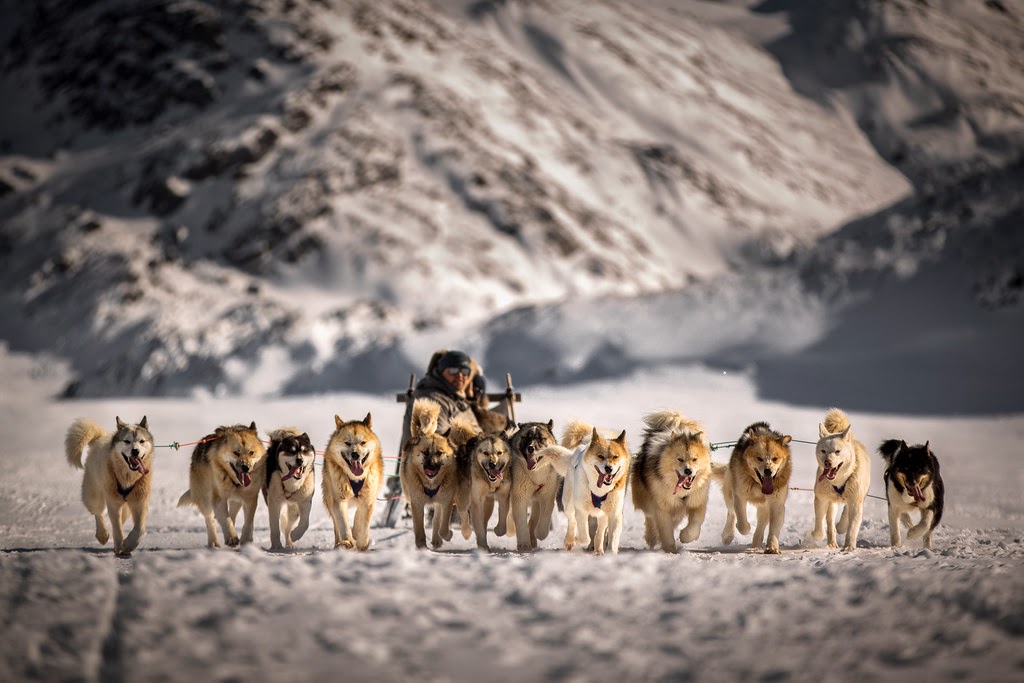
courtesy of ilovegreenland on flickr.com
|
Showing posts with label privacy. Show all posts
Showing posts with label privacy. Show all posts

The Arctic This Week
Welcome and thanks for joining us this week for another edition of TATW! We hope that you find TATW interesting and entertaining to read. If you’re not a subscriber yet, you can sign up here. You can read the PDF version of TATW here.
As always, all editorial choices, opinions and any mistakes are the authors’ own. To comment, to point out an error or to request a back issue, feel free to contact us directly. Anything that we missed? Please feel free to share material with us if you think it deserves inclusion in TATW.
ARCTIC CONFERENCE AND EVENTS LIST
The Arctic Institute maintains and provides access to a list of Arctic-themed conferences, workshops, and events. You can access the list by clicking on the following link:
Please help us keep this list up to date! If you would like to add an event to the list, please submit the required information including the event’s name, dates, location, description, website address and contact information using this submission form. The list will be updated weekly and a link to the list will be provided each week in TATW.
READS OF THE WEEK
To begin this week, get your audio and video fix with a selection of offerings from the think tank sphere. Brookings recently released a podcast on Governing a Changing Arctic, The Council on Foreign Relations posted a video of Icelandic president Ólafur Ragnar Grímsson addressing The Future of the Arctic, and an interview with Shella Biallas, a Foreign Service Officer at the US Embassy in Norway, is now available on our website. Take a look or have a listen.
The journal Polar Geography has recently published a special issue on local and traditional knowledge and data management in the Arctic. Being that our present scientific knowledge of the environment is incomplete and taking into account the immense logistic constraints to conventional scientific monitoring in the Arctic, integrating local and traditional knowledge is crucial. Read more about several different approaches to traditional knowledge in this month’s edition, available here.
Writing on The Fletcher Forum of World Affairs, Iventa Cherneva examines what the appointment of former Norwegian Prime Minister Jens Stoltenberg as Secretary General of NATO will mean for the Arctic. Cherneva believes that Stoltenberg’s well-documented interest in and belief in the importance of the region could result in NATO beginning to play a larger role in security issues in the Arctic.
In business news, the small biotech company TFChem has patented this week an enhanced synthetic imitation of the “antifreeze proteins” (AFPs), a temperature stress-resistant molecule which helps fish in the Arctic survive in waters down to 28°F (-2°C). Instead of extracting the molecule from actual fishes, as is still the case in the industry today, they make it only from sugar. Good news not only for the cosmetics industry, which uses the molecule against oxidative stress involved in skin-aging, but also for the fish! (HP)
A recent report on U.S. Arctic Maritime infrastructure has been made public by the Government Accountability Office. According to GAO, the “report prioritized two broad categories to be addressed in the near term: information infrastructure, such as mapping and charting, and response services, such as search and rescue.”
Finally, in sports, further proof that the worst ideas make for the coolest videos: head on over to Alaska Dispatch to watch a skier get towed by an airplane across a snowfield in northern Alaska. How anyone came up with this idea – let alone successfully carried it out – is unclear, but the results are impressive.
THE POLITICAL SCENE
Canada’s “principled stand”
The Canadian government made headlines last week by boycotting an Arctic Council meeting in Moscow, Russia (G&M, AD, CTV, CBC). Ottawa said in a press release that its decision to not attend the meeting constituted a “principled stand against Russia” in response to that country’s actions in Ukraine. In the press release, Leona Aglukkaq said Canada was “proud to show leadership on the world stage through its chairmanship of the Arctic Council” and would continue to support its work. Although Ottawa’s decision sends a clear signal to Russia, Canada chose to boycott a lower level, non-ministerial meeting (AJ), and at this point, Russian actions in Ukraine have left Arctic relations and the work of the council largely unscathed. For a Canadian perspective on the prospects for Arctic cooperation in light of recent events, see the Russian International Affairs Council’s recent interview with Rob Huebert.
International
The Arctic 5 and the Caspian 5: Not so Different (Geopolitical Monitor).
The Arctic: Thaw with Conflict Potential (International Relations and Security Network).
Designing an Effective European Arctic Strategy (International Relations and Security Network).
The Arctic: Profit-hunting ensures peace but threatens the population with disaster (Ræson, in Danish).
Russia
Russian Ecology Minister Sergei Donskoi said last week that Russia will submit a finalized claim to the UN this fall to extend Russia’s Arctic continental shelf (RIAN). The claim, which should be finalized by year’s end, includes a large portion of continental shelf beneath the Sea of Okhotsk (VOR). In March, the UN Commission on the Limits of the Continental Shelf confirmed Russia’s petition to recognize the zone as Russian continental shelf, a decision which Donskoi said sets an “important precedent” for Russia (AIR, in Russian).
United States
The Alaska Legislature worked through Easter Sunday over the weekend, approving a USD 9.1 billion budget (AD) and extending into a 91st day to push ballot measures to raise the minimum wage and to legalize marijuana from August to the November (AD). Legislators planned a 92nd day on Tuesday in the hopes of reaching agreement on House Bill 278, the state’s omnibus education bill (FNM, AD).
Build icebreakers to protect U.S. interests in the Arctic (The Seattle Times).
Environmental and Economic Security Challenges in a Changing U.S. Maritime Arctic (Hoover Institution).
The Nordics
Canada
Despite the fanfare, devolution means less say for northerners over land and resources (Pembina Institute).
ENERGY
First oil shipment from Russian offshore Arctic draws praise and condemnation
The first shipment of oil from Gazprom’s Prirazlomnoye platform in the Arctic Pechora Sea was sent on its way to market last week (Reuters, Moscow Times). President Vladimir Putin praised the development as a sign of Russia’s increasing investment in the extraction of the Arctic’s oil and gas resources (VOR). Putin presided over the event, making an appearance in a joint teleconference with Gazprom CEO Alexei Miller (AIR, in Russian, Press Release, AJ, RIAN). The Prirazlomnoye platform was, of course, the location the Greenpeace’s “Arctic 30” protest and has become a lightning rod for protests against Arctic oil and gas development more broadly (Blue and Green Tomorrow). In response, Greenpeace published “5 questions for Pres. Putin about Gazprom's first shipment of Arctic oil,” asking about Gazprom’s dismal environmental record and the heavy tax subsidies that were required to make the project feasible. While some see this event as “a new stage in the development of the Russian oil industry,” (Pravda, RIAN) others caution that Russia’s Arctic bonanza will not be as big as Moscow hopes, and that high costs and challenging conditions will continue to stall development of Russia’s Arctic oil and gas resources (OilPrice). John Sauven takes a sober look at the issue for The Guardian, drawing attention to the political and environmental consequences of our continued reliance on fossil fuels.
Alaska Legislature approves gas pipeline plan as 2014 session ends
The Alaska State Legislature concluded its 2014 session with marathon-length proceedings last week. Several issues of concern to the energy sector were addressed. First, the Legislature approved Governor Sean Parnell’s current negotiations with oil companies over a North Slope gas pipeline and LNG export project (AD). The Legislature was not given much latitude to rewrite the terms for the proposed project and passed the plan without major amendments (FNM). The State of Alaska will take a 25% stake in the project, which will now move to preliminary engineering and cost refinement, and will collect taxes on the project in the form of natural gas. In other energy related business, the Legislature approved a USD 30 million tax credit for two Alaska refineries after the closure of the Flint Hills refinery in Fairbanks put pressure on the states remaining oil processing facilities (AD), while also lining up USD 2 million for a woodstove buyback program in Fairbanks and USD 245 million for the replacement of University of Alaska Fairbanks’ aging heat and power plant (FNM).
Should Norway halt oil exploration along Russian border?
Chair of the Norwegian Parliament Stortinget’s Standing Committee on Energy and the Environment Ola Elvestuen this week called for the suspension of exploration in areas of the Barents Sea adjacent to the Russian border due to developments in Ukraine (BO). According to the 2010 agreement between Russia and Norway that settled the two countries’ maritime border in the Barents Sea, any oil and gas deposits that cross the border should be developed jointly, an arrangement which has become politically uncomfortable due to the crisis in Ukraine (DN, in Norwegian). Conservatives in Norway have disputed the suspension (AB, in Norwegian).
Alaska
Actor and activist Robert Redford added his voice to those opposing oil and gas exploration in the Arctic in this editorial for the Huffington Post.
Warm water, cold reality, new frontier for exploiting resources (Sacramento Bee).
Shell chooses Endeavor for Chukchi advising (OE Digital).
ConocoPhillips approved for Alaska LNG exports (PennEnergy).
Finland
Norway
Canada
Russia
Rosneft to build first base for the supply of offshore projects in Murmansk (AIR, in Russian).
Russian Gas Society raises Arctic hydrocarbon assessment to 106 billion tons of oil equivalent (AIR, in Russian).
Underwater platform to be constructed for development of Shtokman field (AIR, in Russian).
Nenets Autonomous Okrug and Rosneft to sign new cooperation agreement (AIR, in Russian).
Arctic – Purpe pipeline has crossed Taz River (AIR, in Russian).
Japanese refused to buy a stake in Yamal LNG (AIR, in Russian).
Greenland
SCIENCE, ENVIRONMENT AND WILDLIFE
Incorporating traditional knowledge in science
The special issue of the journal Polar Geography on local and traditional knowledge and data management in the Arctic comprises several articles on previous and current projects and examples of how traditional knowledge can be used in scientific research. The article by Fidel et al. explores the important role of community knowledge, which can often detect local changes based on multigenerational knowledge. The change in walrus harvest locations bordering the Bering Sea, for instance, gives examples of adaptation strategies (Polar Geography). Bennett and Lantz outline participatory photography to document local observations. Digital photographs are combined with GPS data and interviews. The resulting visual and oral materials fit well with the Inuvialuit culture and traditions of the Mackenzie Delta Region, Northwest Canada (Polar Geography). A truly interdisciplinary article presents the observational framework and database design used to record, analyze and communicate sea ice observations which are based on, among other things, information on ice conditions, weather, ocean state, and animal behavior (Polar Geography).
Sanna Majaneva of the University of Helsinki and the University Centre in Svalbard (UNIS) has studied the life of the Arctic ctenophore Mertensia ovum, or the Arctic comb jelly, of which we have little knowledge. The Arctic comb jelly can be found in the Baltic Sea and the Arctic. The identification of the species is difficult due to the specimens’ fragility and often inadequate description. A combination of photos of individual specimens with morphological and molecular identification methods provides a better result. A more accurate identification would also facilitate the evaluation of the jelly’s role in the ecosystem (Phys). You can find Majaneva’s dissertation here (University of Helsinki).
Snowy owls’ migration from the Arctic
A video from the Cornell Lab of Ornithology illustrates the reasons for snowy owls’ life-long journey. Each year, snowy owls travel vast distances in search of productive feeding areas. This also explains why recently they have been seen more frequently in the southern parts of the U.S. The abundance of lemmings last summer led to a drastic increase in the owl population, which however could not be sustained on the smaller amount of food left in winter. Therefore a great number of them moved south (Inquisitr).
Climate
Age Greenland ice sheet exceeds 2.7 million years (AIR, in Russian).
Into the Maelstrom (summary) (AAAS Science Mag).
Jet Stream Research Called “Holy Grail” in Understanding Climate-Change Impact (Progressive Farmer).
Flora and fauna
Breeding ground for bird flu (Iceland) (AJ).
Biodiversity Arctic: Fauna (Expedition Hope).
Polar bears move around as sea ice habitat changes – this is what resilience looks like (Polar Bear Science).
Expeditions, conferences and research blogs
Issues of Arctic exploration discussed in Yamal (AIR, in Russian).
When will we reach 2°C? (Climate Lab Book)
The first bears (WWF – Thin Ice Blog).
Frontier Arctic ice studies under way (Kara-Winter-2014 Expedition) (Offshore).
Miscellaneous
Scientists propose $28 million centre (Western Producer).
Antarctic and Arctic contamination: The result of slow degradation (Science Codex).
Siberian Mummies in Copper Masks Pose Mystery (Discovery).
Arctic research funded by the European Union (EU Bookshop).
MILITARY / SEARCH & RESCUE
United States
Canada
More than half Canada’s Navy vessels are either being repaired, modernized or otherwise at reduced readiness (National Post).
Canada’s Special Forces to get new vehicles for the Arctic but Army left out in cold (Montreal Gazette).
Levis Shipyard to Refit Flagship Coast Guard Icebreaker (MarketWired.com).
Russia
Several weeks ago, we reported on exercises that saw Russian airborne troops land on a floating polar ice station; now, courtesy of Business Insider, check out this impressive video of what the jump looked like to those participating in it.
Aviation units in Russia’s Northern Fleet have participated in anti-submarine exercises (AIR, in Russian).
Minister of Defense Sergei Shoigu recently completed a trip to the Northern Fleet’s Severomorsk base, where he inspected the construction currently underway on a future Arctic base for Russian submarines (AIR, in Russian).
New monument in Murmansk to honor WWII “soldier-herders” (AIR, in Russian).
Europe
A Belgian tour guide and his group have been rescued after falling into a crevasse while hiking in Svalbard (Svalbard Posten, in Norwegian).
Film buffs should check out the Kickstarter campaign for the documentary The Sledge Patrol, which focuses on the little-known role of the Greenlandic theater in World War II.
MINING
Northern Regions Mining Summit to be held in Vancouver, BC
The Northern Regions Mining Summit is being organized by the Institute of the North and will be held 28-30 May, 2014, in Vancouver, BC. The summit will focus on the social, economic and cultural impacts of mining in Alaska, Canada, and Greenland. You can register on The Institute of the North’s website here and a draft agenda can be found here.
Alaska
Bokan, Niblack funding bill makes progress in Alaska House (North of 60).
Canada
Tata Steel set to finalise investment in Canada (The Hindu Business Line).
Greenland
FISHERIES, SHIPPING AND OTHER BUSINESS NEWS
GAO offers sobering look at shipping prospects in US Arctic
The Government Accountability Office released a report containing its evaluation of the shipping prospect in the U.S. Arctic in the next few years. The report is not overly optimistic about the next 10 years, due to a lack of facilities and infrastructure, the “high operating costs, limited demand from tourists, uncertainties and setbacks in plans for offshore Arctic oil drilling.” What is more, only 1% of navigationally significant waters have been surveyed with modern technology. Sen. Lisa Murkowski stated that she disagrees with the report’s assessment that the commercial maritime activity in Arctic waters off Alaska will likely be limited in the next decade (AD).
News bits from the Adam Smith Conference “Russian Arctic Oil and Gas”
At the Adam Smith Conference “Russian Arctic Oil and Gas”, which took place on April 15 and 16 in Moscow, Vice-President of Rosneft Andrey Shishkin said that Rosneft needed 300 support vessels for the development of the license areas in the Kara Sea. The start of the drilling in the Kara Sea (Universitetskaya field), which will require “an absolutely different approach”, is scheduled for August (Port News). First results should be obtained in November this year (Port News). Other news bits offered at the conference revealed the conceptual design for Arctic class LNG-powered vessel developed by Damen shipyard group (Port News) and the new record high for cargo transit via the NSR in 2013 (Platts).
Fisheries
Worth their weight in gold, oil and uranium? (Greenland) (AJ).
Large herring run predicted for Togiak fishery (Alaska) (AD).
The salmon may disappear from the rivers in the Murmansk region (AIR, in Russian).
Arctic whaling crews set for spring (Arctic Sounder).
Some drag the line a little longer than others (ice fishing) (Finnmark Dagblad, in Norwegian).
Arctic Storm’s surimi production outstrips blocks on strong global market (Undercurrent News).
Shipping
Safety and Shipping Review 2014 (Allianz).
Arctic Sea Shipping: Emissions Matter More Than You Might Think (Marine Insight).
Chilingarov: NSR revival associated with offshore production (AIR, in Russian).
Setting course for Sabetta (Russia) (BO).
Building the Baltika – the World’s First Oblique Icebreaker (video) (G Captain).
Near ice-breaking deal (Russia) (BO).
Break On Through to the Other Side — Climate Change and Navigating the Northwest Passage (Harlem Times).
“Sabetta considered much broader than monoport” (Kommersant, in Russian).
Havyard To Construct Hybrid Battery Powered Arctic PSV (Marine Insight).
Arctic ports became less busy (Barentsnova).
Other business and economic news
Chukotka has proposed two projects in the Far East Development Strategy (AIR, in Russian).
Arctic concrete pour defies subzero work conditions (Journal of Commerce).
Finland’s arctic nature and Finnish design on display at Helsinki Airport (Travel Daily News).
HEALTH, EDUCATION, SOCIETY AND CULTURE
Health
Education
Society
Like an iceberg: on being a journalist in the Arctic (A Date with Siku Girl).
Cross raises questions, offers few answers (Homer News).
Fairbanksan builds elaborate model Alaska Railroad (FNM).
Culture
Arctic denominators (AJ).
Using artwork to address climate change (Philly).
Reindeer & Blue-cheese ('Poro ja sinihomejuusto') Pancakes (Life in Lapland).
INFRASTRUCTURE
United States
Canada
Russia
The vice-president of Rosneft has stated that he believes current infrastructure on the Northern Sea Route is insufficient for the transportation of oil (AIR, in Russian).
Yamal winter road closed (AIR, in Russian).
New river dock to be opened in Yakutia (AIR, in Russian).
SPORTS
United States
Head over to Vimeo to check out this video featuring some excellent shots from the Arguk Expedition of pristine Alaskan wilderness.
Canada
Calgary woman part of expedition rescued off ice floe for $2.7M now planning snorkel relay through Northwest Passage (National Post).
Olympians, soldiers team up for Arctic trek (TheSpec).
Russia
The evacuation of a youth expedition to the North Pole has been postponed due to inclement weather (AIR, in Russian).
Europe
IMAGES AND VIDEO
Sunsets dominated flickr this week, with Rachel Messier posting an Iqaluit Sunset, Sophia Granchinho posting Sunset in Baker Lake, and Mikofox posting Nighttime Colors (though this one’s not quite a sunset). On twitter, The Arctic March posted three cheery expeditions-goers, Clare Kines tweeted an Inuit mother and her child, Finding True North tweeted ice crystals in Nunavut, and Vasily Matveev tweeted “Skysurfers in Polar Town.” Also check out dueling narwhals, snow-covered Svalbard and more snow-covered Svalbard, midnight sun, and sunset through a photographer’s eye, all on Instagram. Also check out Alaska Dispatch’s blood moon photos, as well as some cool videos: “Home Ground” by James Aiken and “The Reindeer Are Coming” by the International Center for Reindeer Husbandry.
Abbreviation Key
Aboriginal Peoples Television Network (APTN)
Aftenbladet (AB)
Alaska Business Monthly (ABM)
Alaska Dispatch (AD)
Alaska Journal of Commerce (AJC)
Alaska Native News (ANN)
Alaska Public Media (APM)
Anchorage Daily News (ADN)
Arctic Info (Russian) (AIR)
Arctic Institute (TAI)
Barents Nova (BN)
Barents Observer (BO)
Bristol Bay Times (BBT)
BusinessWeek (BW)
Canadian Mining Journal (CMJ)
Christian Science Monitor (CSM)
Eye on the Arctic (EOTA)
Fairbanks Daily News-Miner (FNM)
Financial Times (FT)
Globe and Mail (G&M)
Government of Canada (GOC)
Government of the Northwest Territories (GNWT)
Huffington Post (HP)
Indian Country Today Media Network (ICTMN)
Johnson’s Russia List (JRL)
Kalaallit Nunaata Radioa (KNR)
Lapin Kansa (LK)
Moscow Times (MT)
National Geographic (NG)
Natural Gas Europe (NGE)
Naval Today (NT)
New York Times (NYT)
Northern Journal (NJ)
Northern News Service Online (NNSO)
Northern Public Affairs (NPA)
Norwegian Polar Institute (NPI)
Nunatsiaq News (NN)
Oil & Gas Journal (OGJ)
Ottawa Citizen (OC)
Petroleum News (PN)
RIA Novosti (RIAN)
Russia Beyond the Headlines (RBTH)
Russia Today (RT)
Voice of Russia (VOR)
Wall Street Journal (WSJ)
Washington Post (WP)
Whitehorse Star (WS)
Winnipeg Free Press (WFP)
Yukon News (YN)
| 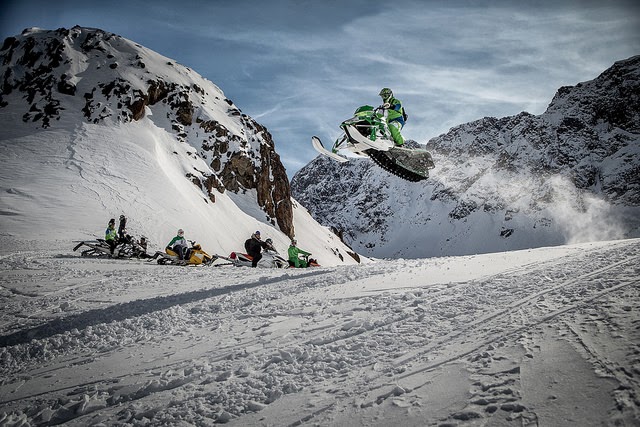
courtesy of ilovegreenland on flickr.com
|
-01.png)


