Showing posts with label EU. Show all posts


Ukraine Crisis and the Arctic: Penalties or Reconciliation?
By Andreas Østhagen, April 30, 2014


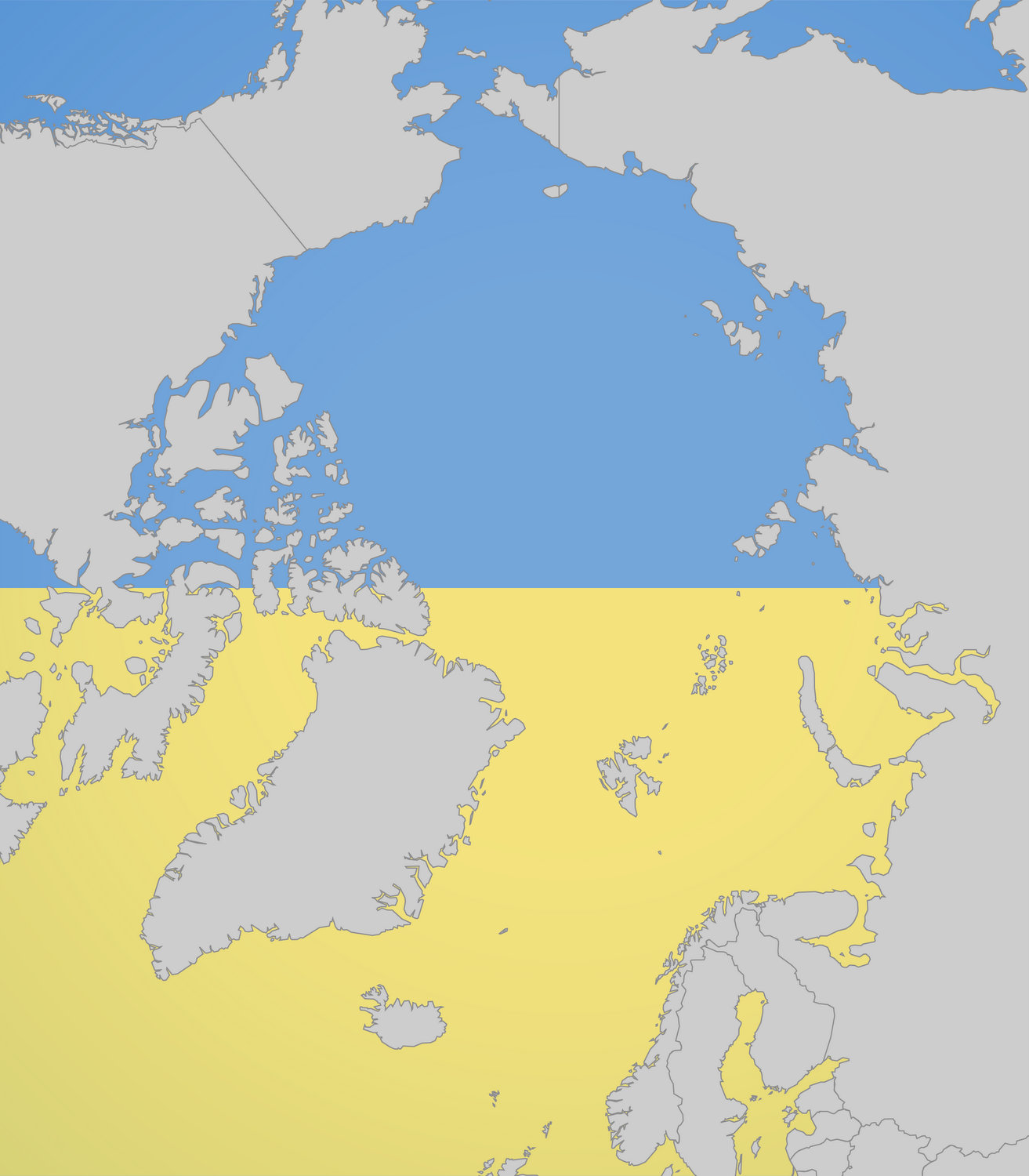
Canada’s recent decision to boycott an Arctic Council task force meeting held in Moscow is a direct example of how the Ukraine conflict is starting to impact Arctic cooperation. Given its prominent position in the Arctic, however, Russia is integral to most schemes for the region’s future development. As vocalized by both former US Secretary of State, Clinton, and the current Prime Minister of Iceland, Gunnlaugsson, the Ukraine crisis might have a severe and unintended impact on Arctic cooperation [1].

ukraine3-018.jpg

The impact of the events in Ukraine for Arctic cooperation will be neither straight forward nor harmonized across the region. Instead it will vary according to the interests of the different Arctic states. They could decide to use the Arctic as an arena for penalizing Russia further or use it to engage Russia in dialogue. Currently, officials dealing with Arctic affairs are asking themselves what exactly these consequences will be, deciding whether to take further action (like Canada) or issue warnings (like Iceland).

Economic Development

First, the immediate and direct impact of decisions taken outside of an Arctic context could hamper Russia’s strongest interest in the Arctic, namely economic development. Sanctions put in place by the European Union and the United States have the potential to affect the multitude of European and American companies engaged in developing the vast resource potential in the Yamal, Nenets and Kara Sea regions. Highlighting this, on April 28 sanctions were put in place by the US on Rosneft’s president, Igor Sechin [2].

This summer ExxonMobil alone is scheduled to conduct some of the most expensive exploratory drillings in the history of offshore oil and gas development in the Kara Sea through its joint venture with Rosneft [3]. BP is similarly dependent on Rosneft after TNK-BP was incorporated into the Russian oil giant in 2013, leaving BP with 19.5 percent of Rosneft’s shares [4]. Should further sanctions be put in place limiting western companies dealings with Russian energy companies, from either the Russian or the EU/US side, Arctic economic development in Russia will take a hit.

Cancelling Cooperation

In terms of direct cooperation in the Arctic sphere, exclusion of Russia or the boycotting of various Arctic meetings by one or several of the Arctic states have the potential to derail the relatively well-established modes of collaboration that have developed in the Arctic. Canada’s decision not to attend the Arctic Council task force meeting in Moscow last week is a minor, but still significant symbol of how Arctic cooperation is affected by the international crisis further south [5].

Similarly, Russian officials were not invited to take part in a pre-meeting to the North Atlantic Coast Guard Forum in Sydney, Novia Scotia on March 31, where the establishment of an Arctic Coast Guard Forum was discussed. The planned Northern Chiefs of Defence (CHODs) meeting scheduled for June in Iceland seems likely to be postponed as well, as could be expected. The Northern CHODs forum is one of the few arenas, in addition to the Arctic Security Forces Roundtable, where all the Arctic states convene to discuss hard security matters. Consequently several of the informal and formal arenas where civilian and military issues in the Arctic are discussed are put on hold.

Various Interests
Yet, Russia’s participation in the high level Senior Arctic Officials (SAO) meeting under the Canadian chairmanship in Yellowknife on March 25-27 proceeded as planned. In the Arctic Coast Guard Forum meeting it was also pointed out that any coast guard forum for the Arctic without the Russians present would prove futile, given Russia’s predominant role in Arctic maritime matters. For the United States and the Scandinavian countries such an approach seems only logical, given adjacent maritime borders that involve shared fish stocks and natural resource deposits. This highlights the importance of maintaining a working relationship with Russia on specific issues for some of the Arctic states, albeit these interests vary amongst the Arctic countries.

For decades Norway’s collaboration with Russia on the joint management of fish stocks in the Barents Sea has been promoted as a model for dealing with Russia on a sensitive topic that entails both a civilian and a military dimension [6]. Similarly, the 2010 maritime delimitation agreement was highly motivated by a desire in both countries to develop potential petroleum resources in the former disputed maritime area. Related cooperation between Russia and Norway has expanded since [7].

Although Sweden and Finland do not share a maritime border with Russia, Finland in particular has an extensive land boundary and is dependent on a rational working relationship with its larger neighbor. Just in terms of border crossings, Finland issued 1.3 million visas to Russia in 2013, a third of all Schengen entry visas going to Russia, according to the BarentsObserver [8]. As argued by Finland’s Minister for European Affairs and Foreign Trade, Stubb, Finland is heavily dependent on Russia’s economic trajectory and the consequences of the Ukraine crisis might be severe for the Finnish economy [9].

In the Bering Sea the US and Russia have a long standing collaboration on research and management of fish stocks, in particular with regards to the Alaskan Pollock [10]. For the last 19 years Russia and the US have worked together in this maritime area, and as ship traffic is increasing, the need for collaboration is only set to increase [11]. Combatting illegal, unreported, and unregulated (IUU) fishing in the area has already been stated as one of the main goals in the US’ Arctic Implementation Plan from January 2014 [12]. Also, as most vessels frequenting the Bering Sea are fishing boats, the potential northern movement of fish stocks due to temperature increases as seen in the North Atlantic will force the vessels to move further north and demand even greater coordination and collaboration between Russian and US coast guards, similar to what has developed in the Barents Sea.

Russia’s Primacy in the Arctic

The different Arctic states all have their own «special» relationships with Russia, with varying degrees of interdependency and collaboration. Related, it is less counterproductive to Canada’s Arctic interests to take a strong stance towards Russia than it is for some of the Scandinavian countries. The seven Arctic states excluding Russia also do not form any cohesive block against Russia, in part due to the fact that membership in international organizations vary between NATO and the EU (5 NATO members and 3 EU members – only Denmark overlaps).

Yet, coordinated efforts to exclude Russia from specific Arctic forums have been – and will probably continue to be – put in place. We should, however, not forget that Russia is the largest of all the Arctic actors, measured in everything from population to economic activity and resource potential. Efforts to deal with environmental pollution, search and rescue, and common standards in the Arctic have also been developed with a lowest common denominator approach, depending on all the Arctic states engaging and signing up to the agreements. Therefore, having Russia onboard on Arctic-related agreements is not only preferable, but also essential to ensure a responsible development in the Arctic.

Conclusion – An Arena for Penalties or Reconciliation?

In sum, Russia is dependent on a positive Arctic development, while the country is also integral to most of the development in the region. The other Arctic states undoubtedly have an obligation to act on proceedings in Ukraine, yet on a lower working level many of them are heavily dependent on continuing business as usual in various areas where Russia constitutes an essential partner. Therefore, the somewhat inconsistent responses with regards to various Arctic domains are likely set to continue.

In previous periods of high tension between Russia and the west, the Arctic has actually served as a theatre for continued cooperation. A good example of this is the 2008 Georgia crisis where collaboration in the Arctic was almost unscathed, arguably also serving as an arena for normalizing relationships as the crisis ended. What role will the Arctic have this time around? That depends on the extent to which Russia will continue to paint itself into a corner, and whether the other Arctic states choose to use the region as an arena for penalties or reconciliation.


[6] See for example Hønneland, Geir (2007), “International Cooperation and Arctic Governance: Regime Effectiveness and Arctic Governance”, London & New York: Routledge.


Towards an Active Role for the EU in the Arctic?


This excerpt is part of the journal article “The European Union’s Gateways to the Arctic”, which was published in European Foreign Affairs Review 19, no. 1 (2014), pages 101–120. The full article, which is available only via subscription, can be downloaded here.

By Kathrin Keil and Andreas Raspotnik The European Union (EU) is increasingly depicted as an actor with a growing interest towards the Arctic region. In order to shed light on the various possibilities for the EU’s involvement in Arctic affairs, the article aims to have a close look at potential EU ‘gateways’ to the Arctic, subdivided into geographical-institutional and policy links, and their logical interaction. The former aspect looks at the historical, institutional, and legal links between the EU and the three Arctic actors Norway, Iceland, and Greenland. The latter examines concrete steps of cooperation between the EU and these countries in selected, Arctic-relevant policy areas. These include the challenges of environmental protection in general and climate change and sustainable development in particular, and the possibilities of benefitting from newly available Arctic resources such as oil and gas, shipping routes and fishing grounds.

The article highlights different ways of explaining EU interest in the Arctic. One resorts to geo-strategic reasoning, pointing to the EU’s aim to increase or extend its influence and (normative) power to new, emerging regions like the Arctic, which may be of strategic importance in the future, and its grip on important commodities like energy and fish resources. Another, more geo-economicand institutional view, is that the EU reacts to processes of interdependence and globalization, which is especially prevalent in the area of climate change and resources, and aims to pursue its interest though involvement in relevant institutions. Finally, one could argue that the EU has a different understanding or conceptual narrative about the Arctic region. Instead of viewing the Arctic as not more than the sum of national, territorially fragmented nation-states, the EU sees a complex region with effects on the entire planet and demands common and cooperative responses due to shared responsibilities, which could be described as a geo-ecological viewpoint. The combination of the EU’s undoubtedly strong institutional capacities, the weight of its policy competences, its economic power and environmental effect on the region, and its political ties with Arctic states, point to a mix of geo-economic and geo-ecological footholds as the most promising approach to pursue its aim to become a relevant actor in the Arctic.

The article concludes that while the broad reasoning for EU involvement in the Arctic appears conclusive, the concrete approach the EU has taken so far to substantiate its Arctic role is rather elusive. Most importantly, it remains open why an overarching EU-Arctic Policy is necessary in order to substantiate the EU’s policy aims in the Arctic, especially against the background of the strong bilateral and regional ties that the Union already has with various Arctic states. It would seem more appropriate to speak of single EU-Arctic policies. But also here the question remains why a new and overarching EU-Arctic approach is at all necessary and why the existent bilateral and multilateral cooperation agreements with their foci on energy, sustainable development, climate change, environmental protection, transport or infrastructure should not rather be further developed to include an Arctic dimension where appropriate and where this has not happened yet.


In or Out? The Symbolism of the EU's Arctic Council Bid


For the Norwegian version of this article, see the North Norway European Office.

By Andreas Østhagen Since launching its first Arctic communiqué in 2008, the European Union has strived to be accepted as a legitimate Arctic actor. Gaining observer status in the Arctic Council, an increasingly prominent international forum, seems to constitute the primary step towards such recognition. Yet the EU's symbolic quest to join the Arctic Council as an observer has proved disproportionately long and difficult.

The final result, as laid out during the Arctic Council's recent ministerial meeting in Kiruna, Sweden, reveals the true extent of the in-group/out-group symbolism characterising today's Arctic debate – a differentiation as important for Arctic states as it is for the EU. Exploring this differentiation, the following article will take a look at the rationale behind the EU’s engagement in the region and its developing Arctic policy, before assessing what its relationship with the Arctic Council actually symbolises.

Explaining an Arctic Interest
Underpinning the EU’s relatively sudden vocalisation on Arctic matters is its transforming role as a foreign policy actor [1]. For Sweden, Denmark and Finland, the Arctic represents an area of both domestic and foreign policy due to their status as Arctic states, and subsequently as full members of the Arctic Council. The EU itself tends to emphasise foreign policy more strongly in its Arctic discourse, whilst also using domestic policies to legitimise its Arctic engagement.

The EU enjoys strong geographic proximity to the region, but as Kathrin Keil highlights, there are also multiple policy areas in which the EU demonstrates a vested interest in Arctic development, including new trans-polar shipping routes, energy imports from the Arctic, EU-funded polar research and fisheries activity, in addition to regional policy tools and mechanisms [2]. As such, the developments taking place in the Arctic region are undoubtedly of relevance and importance to the EU, though this in itself may not be enough to prove the EU’s legitimacy as an Arctic actor.

The path towards an EU Policy for the Arctic
The first official step towards an EU Arctic policy arose in November 2008 when the European Commission published a communiqué titled, «The European Union and the Arctic Region». It emphasised three issues: (1) enhancing Arctic multilateral governance; (2) preserving the Arctic climate; and (3) promoting the sustainable use of natural resources [3]. Reactions to this first Arctic policy initiative were mixed. Although many Arctic actors expressed support for the EU’s engagement in the region, others perceived the EU as trying to address problems that were not particularly pressing, namely governance, resource management, and the environment [4].

Taking such interests into account, the Commission waited until June 2012 to release a new communiqué – a second and arguably more moderated step on the path towards an EU Arctic policy. The three overarching themes from 2008 were replaced by: (1) knowledge and competence; (2) funding and promoting sustainable use of resources; and (3) engaging in international cooperation[5].

The 2012-communiqué is striking not for what it contains, but for what it omits. Although the focus points in 2012 do not differ greatly from that of 2008, some of the more sensitive issues and top-down approach are excluded from the document. Removed are the references to governance gaps, proposed new frameworks for the Arctic and the portrayal of the EU as an Arctic crusader. While relatively more concrete, the measures themselves appear to be somewhat random; a laundry list of what the EU has done, and plans to do, with relation to the Arctic. The communiqué therefore lacks an overarching purpose, in a reversal upon the communiqué in 2008. The 2008 communiqué outlined a clear strategy, albeit controversial, while the 2012 communiqué indicates a new wariness of the interests over other Arctic actors.

Courtesy of Delegation of the EU to Russia
http://goo.gl/wU3Ei
The EU and the Arctic Council
The clearest explanation for the EU’s altered approach towards the Arctic lies in its ambition to become an observer to the Arctic Council. Since 2008, the EU has stated that such a status is important for its future engagement in the region [6]. Its bid in 2009, however, was vetoed by Canada, which stated that “Canada doesn’t feel that the European Union, at this stage, has the required sensitivity to be able to acknowledge the Arctic Council... “[7]. This was attributed to the EU’s 2008 import ban on seal products, which was particularly contentious for Canada. At the ministerial meeting in 2011, the decision concerning observer status applicants was deferred again until 2013.

The EU (represented by the European Commission) has nonetheless been attending Arctic Council meetings as an ad-hoc observer by consecutively requesting participation. In reality, the coveted position as a ‘permanent’ observer does not entail much more than a regular invitation to attend Arctic Council meetings and the opportunity to contribute to its working groups, an option already available to ad-hoc observers [8]. The emphasis the EU has placed on achieving observer status is thus more symbolic than tangible in nature: being accepted as an "in-group" member confers more legitimacy as an Arctic actor than the practical outcome of the status in itself.

Kiruna Ministerial Meeting 2013
The foreign ministers of the eight Arctic states met in Kiruna in mid-May this year to conclude the two-year Swedish chairmanship of the Arctic Council, returning the reins to the first chair of the Council, Canada. Much has been written about the increased influence of the Arctic Council, with particular attention paid to the new applicants for observer status. In a much-anticipated move, it was decided that China would be accepted as an observer, in addition to Japan, Singapore, South Korea, Italy and India. While the EU's bid was "affirmed", a final decision on the issue was deferred once more amidst the persistent dispute with Canada over the EU’s import ban on seal products [9]. EU officials greeted the decision with cautious optimism, with Erkki Toumijou, foreign minister of Finland, soon stating that a resolution might take no longer than a few months [10].

In or Out: The importance of symbolism
There are multiple processes underway in the Arctic Council’s deliberations. As already argued, the EU has been working vigorously to become accepted as an observer to the Arctic Council – not for practical rationales but as a means to enhance its credibility as an Arctic actor. Simultaneously, the Arctic states, and Canada in particular, have been using their veto powers to signal the difference between Arctic and non-Arctic states, highlighting their dominance in Arctic matters. Canada subsequently uses its veto power to emphasise its sovereignty in the Arctic.

Critical to this is the symbolism surrounding the export of seal products, which may not hold great economic weight in EU-Canada trade relations, but remains of grave importance to the local indigenous peoples living off such activities. The seal ban issue thus becomes pivotal to Canada’s self-portrayal as an Arctic nation, while symbolising the inherent conflict between Arctic and non-Arctic actors. Given the lack of practical benefits conferred by observer status in the Arctic Council, the main issue is simply symbolic: who is in or who is out, and who has the power to decide. Consequently, the EU is kept “out” of the Arctic Council by Canada, and will remain so until a solution that favours Canada has been found. At the same time, by affirming the EU’s bid, the Arctic Council has taken steps to ensure that the EU will remain engaged with the Council on its path to achieving observer status.

Conclusion
As international actors articulate an interest in the developments in the Arctic, legitimacy becomes the predominant issue. Such legitimacy confers access, power, influence and opportunities. The Arctic Council, an intergovernmental forum which up until recently was largely peripheral, has been given the role as the official gatekeeper of the region. Contributing to this is the Council’s inclusion of indigenous peoples, its vow not to deal with hard security issues and the active participation of Russia.

In the run-up to the recent Kiruna ministerial meeting, the decisions on the multiple observer status applications were highly anticipated. Although the benefits of this status are limited, it remains of great symbolic value to those obtaining it, especially as the dichotomy between Arctic and non-Arctic actors intensifies. From the perspective of the Arctic Council, had countries like China or Japan not been granted access to this arena, it might risk becoming less relevant, and therefore less legitimate, as other international fora develop. The same reasoning applies for the EU, as the Arctic states struggles with the ambivalence of wanting the EU close, but not too close.

Despite starting out with lofty ideals about its Arctic engagement, the EU has been forced to re-adjust and modify its approach to the region as access to the Arctic Council has gained primacy. Its conflict with Canada, of life-altering consequences for indigenous peoples and of symbolic significance to Canada as an Arctic nation, will determine if and when the EU might develop from being an Arctic outsider to an Arctic insider. In the current situation, however, the EU is caught in between.


Sources:
[1]. Duke, S. (January 2008). The Lisbon Treaty and External Relations. EIPASCOPE, p. 13-18.
[2]. Keil, Kathrin (October 2012). The EU as a Prospective Permanent Observer to the Arctic Council: Footholds, Virtues, Concerns and Obstacles (Part 1). http://www.thearcticinstitute.org/2012/10/the-eu-as-prospective-permanent.html
[3]. European Commission. (11. November 2008). The European Union and the Arctic Region. Retrieved 5. March 2010 from Communcation from the Commission to the European Parliament and the Council: http://ec.europa.eu/external_relations/arctic_region/docs/com_08_763_en.pdf
[4]. EurActiv. (14. May 2009). EU-Russia summit to focus on 'hard security'. Retrieved 3. June 2010 from EurActiv news article: http://www.euractiv.com/en/priorities/eu-russia-summit-focus-hard-security/article-182320
[5]. European Commission and the High Representative of the European Union for Foreign Affairs and Security Policy. (26. June 2012). Developing a European Union Policy towards the Arctic Region: progress since 2008. Brussels.
[6]. European Commission. (11. November 2008). The European Union and the Arctic Region. Retrieved 5. March 2010 from Communcation from the Commission to the European Parliament and the Council: http://ec.europa.eu/external_relations/arctic_region/docs/com_08_763_en.pdf
[7]. CBC News. (29. April 2009). Canada against EU entry to Arctic Council because of seal trade ban. http://www.cbc.ca/news/world/story/2009/04/29/cda-eu-arctic-seal.html
[9]. Arctic Council. (15. May 2013). Kiruna Declaration.
[10]. European Commission. (15. May 2013). Joint Statement by HR/VP Catherine Ashton and EU Commissioner Maria Damanaki regarding Arctic Council decision on EU's observer status http://europa.eu/rapid/press-release_MEMO-13-440_en.htm 
& Pedersen, Torbjørn. (15. May 2013). Arktisk Råd åpner dørene for Kina. http://www.aftenposten.no/nyheter/uriks/Arktisk-Rad-apner-dorene-for-Kina-7202483.html#.UbX4uedM9IE