Showing posts with label European Union. Show all posts

To Svalbard and Beyond – The European Parliament is Back on its Arctic Track


To Svalbard and Beyond – The European Parliament is Back on its Arctic Track


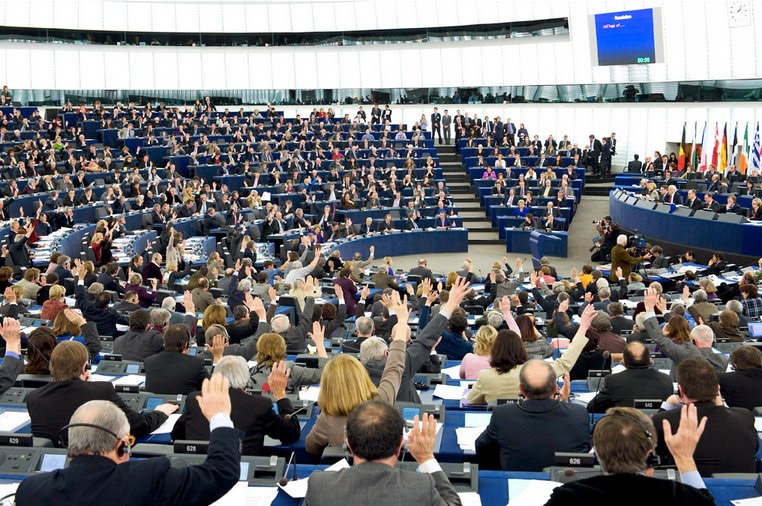
Three years after the European Parliament’s (EP) last resolution on Arctic issues[1], the European Union’s (EU) parliamentary institution has adopted yet another non-binding resolution dealing with the EU’s northern neighbourhood in its plenary session on Wednesday, March 12th.
Screen Shot 2014-03-17 at 12.19.23 PM.jpg
Photo: EU Parliament
In the resolution, contentious issues like Svalbard’s Fisheries Protection Zone (FPZ) (see our previous article) are weeded out, and the main point seems to reiterate that the EP is – and should be – taken into account when discussing EU-Arctic matters and creating a respective policy. The Joint Communication by the European Commission (‘Commission’) and the European External Action Service (EEAS) from June 2012[2] was generally well received, and therefore one can wonder why the EP is issuing a third resolution on Arctic matters just before the upcoming elections?

The resolution on an “EU strategy for the Arctic”[3] followed a plenary debate held on April 17th, 2013. After rejecting a motion for a resolution[4] submitted by the Greens/European Free Alliance Group, the EP accepted, and slightly amended, a joint motion for a resolution[5] by the Group of the European People’s Party (EPP), the Group of the Progressive Alliance of Socialist & Democrats (S&D), the Alliance of Liberals and Democrats in Europe (ALDE) and the European Conservatives and Reformists (ECR). In the rather complex EU policy-making process, the EP uses a non-binding resolution in order to promote the institution’s own view and perspective on, for example, a certain foreign policy agenda. An EP resolution is subject to a simple majority and is neither a proper legislative European act nor a simple EP policy paper.

No Rapid Movement
When scrutinizing the EU institution’s policy output, it is necessary to distinguish between the EU’s different voices and its actual legal impact. The EU’s long (official) Arctic journey started in October 2008 with an EP resolution on “Arctic governance”,[6]and the next step may be a Council conclusion issued by the Member States scheduled for May 2014. Although both the EP and the Commission have been considerably Arctic-active, Member States lack a certain interest to put the Arctic on the EU policy table.

Despite this disinterest, some progress has been made. The EP adopted its second resolution in 2011; rather unwieldy titled “A sustainable EU policy for the High North”, it was mainly concerned with stressing the EU’s interests and rights in the Arctic (and its governance structures) by highlighting the EP’s recognition of the Arctic Council (AC) as the legitimate forum for Arctic cooperation. It was the EP’s attempt to straighten up the mess caused by the first resolution in 2008. This relates specifically to a proposed Arctic Treaty, similar to the Antarctic Treaty System, and based on (the EP position of) a supposed vacuum in Arctic governance – the Arctic being “not governed by any specifically formulated multilateral norms and regulations”. It goes without saying that this approach was not very well perceived by some of the Arctic states.

Fluffy terminology
The title of the 2011 resolution can be described as bulky, as both “sustainable” and “High North” are terms extensively used in European Arctic debates, albeit without explicitly scrutinizing its meaning. Terms such as “geopolitics” or “geostrategic importance”, for example, are similarly vague. Almost every international matter of perceived importance has a geopolitical significance to it; yet the meaning and implications of these terms are rarely well defined. “Sustainable development” has become an obligatory imperative when publically and politically discussing the future of the Arctic region, regardless of the vagueness or even triviality of the concept. How does one actually measure the sustainable development of the Arctic?

The “High North”, on the other hand, is an explicitly framed and constructed term by the Norwegian government in order to create an at least Norwegian internal Northern/Arctic awareness, and consequently legitimize future economic development of the region.[7] Arguably, the EP’s usage of both terms in its 2011 resolution’s title indicates awareness of delicate Arctic-related matters and a certain affinity for especially relevant partners. Regardless of the title, the resolution definitely indicates a shift in the EP’s Arctic perception, mainly based on an increased gain of Arctic-related knowledge developed in the EU’s corridors in Brussels and influenced by many different incidents between 2008 and 2011.

Nuancing and differentiating
The 2014 March resolution now adopted in plenary seems to indicate no great alteration in the EP’s policy-approach to the Arctic. It lists numerous aspects that need to be included as the Commission develops the “strategy” further, while it also encourages the Commission to prioritise Arctic policy development to a greater extent than what has been the case in recent years. It seems, however, worth noting that the EP returns to “strategy”, a term perceived rather sceptically by Commission and EEAS officials. The United Kingdom, for instance, did not develop a UK Arctic strategy per se, but an Arctic policy framework, as it is argued that a strategy can only be developed for an area the actor can exercise some kind of control.[8] Regardless of this terminological word play, the EP insistently refers to the EU’s need to ensure legitimacy and local support for its very own Arctic engagement. Additionally the EP “regrets the effects which the EU regulation relating to the ban on seal products has produced (…) in particular for indigenous culture and livelihood”. It will be worth observing if such a statement, irrespective of the resolution’s legally non-binding character, has a positive influence on the Arctic relationship between the EU and one particular Arctic state.

Looking at the different motions from the party groups, some other interesting points stand out. The Greens are, as always, suggesting a moratorium and expresses concern over the so-called “militarisation” of the region. Wisely enough, at least from a general EP point of view, the other party groups have not taken these opinions into the final resolution. The EPP group seems to be particularly harsh with regards to the EEAS and their role as the coordinating authority for the EU’s Arctic policy development.[9] ALDE, on the other hand, calls for increased focus on the European Arctic – a proposal worth considering. As previously argued by The Arctic Institute, an EU Arctic policy should first and foremost be focused on its own Arctic areas, equivalent to what other Arctic states do in their policies, before it tries to meddle in larger circumpolar affairs.

Nevertheless, neither argument was (explicitly) part of the joint motion or the final resolution. However, the EP seems to now finally recognize that “the regions of the Arctic differ substantially” from each other, which is especially relevant to the ongoing international debate over whether Arctic resources, depending on their actual location, should be exploited or not. In that regard, the EP’s new resolution focuses specifically on the various economic opportunities the Arctic holds and related chances for European businesses. Consequently, Michael Gahler, the EP’s rapporteur for the 2011 resolution, emphasizes the EU’s need to “stake its claims”, especially in order to distinguish itself from the increasingly announced Arctic-related interests by Asian states.[10]

Greenpeace also received the resolution positively, indicating an apparent call by the EP to establish a sanctuary in the High Seas area around the North Pole.[11] However, it has to be doubted that the stated backing of the EP to support “the development of a network of Arctic conservation areas and (…) the protection of the international sea area around the North Pole” equals the perception advocated by Greenpeace. In a similar way, a commentary published in the Arctic Journal even falsely referred to an EP push regarding a moratorium on industrial exploitation for the Arctic Ocean.[12] There may be different ways to interpret legislative acts, policy papers or regarding opinions. However, the current EP resolution focuses on economic and industrial activity, in tandem with a “sustainable approach”, which contradicts the highlighted focus by Greenpeace on preservation and protection only.

Conclusion
The main point of the resolution seems to just reiterate the importance of the EP in the EU-Arctic policy-making process. As the Council’s conclusions are scheduled for May, individuals in the EP undoubtedly want to make sure that the EP’s consultative role is not forgotten on this particular issue. Additionally, as with the Svalbard discussion taking place in the previous plenary, many of the MEPs engaged in the issue have constituencies to answer to in the upcoming European election and can use their Arctic engagement to brand everything from environmental consciousness (the Greens) to local and regional development (Swedish/Finnish MEPs). Whether or not the Arctic is an issue that will help improve a relatively low EP-elections turnout, however, is debatable. At least the resolution keeps the Arctic in focus in Brussels – albeit without a clear end-goal in sight.


[1] European Parliament resolution of 20 January 2011 on a sustainable EU policy for the High North (2009/2214(INI))
[2] Joint Communication on “Developing a European Union Policy towards the Arctic Region: progress since 2008 and next steps”, JOIN(2012) 19 final. The communication was analyzed by The Arctic Institute on July 5, 2012.
[3] European Parliament resolution of 12 March 2014 on the EU strategy for the Arctic (2013/2595(RSP))
[6] European Parliament resolution of 9 October 2008 on Arctic governance
[7] For an interesting read seeLeif Christian Jensen (2012). Norway on a High in the North: a discourse analysis of policy framing, Doctoral Thesis, University of Tromsø
[8] As stated by Jane Rumble, Head of Polar Regions Department, UK Foreign and Commonwealth Office at the Arctic Frontiers conference 2014 in Tromsø (Norway). However, the actual difference of strategyand policy framework can be brought into question.
[10] EEP Group in the European Parliament Press Release, 13 March 2014: http://pr.euractiv.com/node/104996
[11] Neil Hamilton (Greenpeace): The European Parliament backs our vision for an Arctic sanctuary, published March 12, 2014 on http://www.greenpeace.org.uk/blog/climate/european-parliament-backs-our-vision-arctic-sanctuary-20140312
[12] Kevin McGwin: EU pushes Arctic sanctuary, in Arctic Journal, published March 13, 2014


From Seal Ban to Svalbard - The European Parliament Engages in Arctic Matters


From Seal Ban to Svalbard - The European Parliament Engages in Arctic Matters

As the European Parliament (EP) is set to pass a resolution on the Arctic in its next plenary session on Wednesday March 12, and a Council conclusion on the issue is scheduled for May [1], the Arctic continues to be on the EU’s policy agenda.
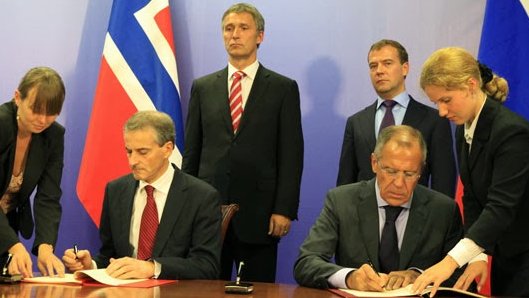
signing of treaty.jpg
Photo: MFA Norway
In its recent plenary in February, Members of the European Parliament (MEPs) discussed several questions posted concerning the legality of the Norwegian interpretation of the Svalbard Treaty, enquiring whether the EU (and its Commission) accepts the Fisheries Protection Zone (FPZ) surrounding the archipelago. This is not the first time a MEP has engaged in that particular issue, as former Vice President of the EP Diana Wallis already sparked a debate on the Treaty and its interpretation back in 2011.

The questions this time around were not primarily focused on the Arctic per se, but instead on fishing rights and potential losses for EU-fishermen in a specific Norwegian Arctic area. The issue itself cannot be separated from larger Arctic geopolitics, however, as the Archipelago of Svalbard and its particular international legal arrangement is an essential component thereof. As such, it also intertwines with the EU’s attempt to develop a coherent and comprehensive policy for the Arctic region. With three months to go before the EP elections are held in May, and with the EU’s status as an Arctic Council (AC) observer still pending, one can ask why this topic has now re-surfaced on the EU’s policy table.

The recent discussion in the European Parliament

The Polish MEP Jarosław Leszek Wałęsa, on behalf of the EP’s Fisheries Committee (PECH), directed questions to Maria Damanaki, the EU’s Commissioner for Maritime Affairs and Fisheries. The questions reflect a fear of losing rights to the fishery resources around Svalbard, as sections of its Fisheries Protection Zone (FPZ) were ceded to the Russian Federation as part of the 2010 delimitation treaty establishing the maritime border between Norway and Russia in the Barents Sea.[2]

As Wałęsa formulated it in two of his five written questions:
  • Does the Commission believe that the Member States which are party to the 1920 Spitsbergen Treaty enjoy equal fishing rights in the Svalbard FPZ?
          and
  • If EU fishermen have lost their right to fish in the Svalbard FPZ east of the Murmansk line, will the Commission consider claims for compensation?
Other MEPs expressed similar positions. Most notably Carmen Fraga Estévez from Spain argued that many EU member states believe that Norway’s interpretation of the Paris Treaty [the Svalbard Treaty] is against international law. Similarly, Maria do Céu Patrão Neves from Portugal expressed a need for the Commission to be firm against Norway and Russia in this matter.

As stated by the Commissioner present, Janez Potočnik, this is a sensitive issue involving one of the EU’s most important partners (Norway) in terms of both Arctic and fisheries issues. The related coverage in Norwegian media already serves as a prime example highlighting this particular addressed sensitivity.[3] In his statement, Potočnik followed a consistent line of argumentation drawing on previous Commission statements on that topic. He highlighted and consequently re-stated a Commission’s 2011 Note Verbales to Norway and its remark that the EU accepts Norway’s practice of the FPZ on the conditions that it is enforced in a non-discriminatory manner and respected by all interested parties.

The Legal Status of Svalbard and its Fisheries Protection Zone

The Svalbard Treaty [4], which was signed 9 February 1920, is a unique combination of sovereignty, internationalization and demilitarization.[5] Coming into force in 1925, the Treaty and its Article 1 respectively, confers the “full and absolute” sovereignty over – the former terra nullius – Archipelago of Spitsbergen/Svalbard [6] to the Kingdom of Norway. However, understood as a diplomatic package deal, the Treaty stipulates that the Norwegian sovereignty is subject to certain conditions, explicitly outlined in the Articles 2 to 9. In particular Article 2 and 3 specify the right of access for maritime, industrial, mining and commercial operations for nationals of all the contracting parties to the territory of Svalbard and its territorial waters. Yet, as the Svalbard Treaty is a pre-UNCLOS (United Nations Convention on the Law of the Sea) settlement, it remains inconclusive if the Treaty applies to maritime areas initially stipulated in UNCLOS, namely the Exclusive Economic Zone (EEZ) and the continental shelf.[7] The Treaty’s wording indicates that it onlyapplies to the territory and the respective adjacent territorial waters of Svalbard. Both legal concepts – the EEZ and the continental shelf – did not exist in 1920/1925 and are consequently not (explicitly) referred to in the Treaty.

Therefore, the terminologically simple, but politically, legally and diplomatically difficult, question is: Do the stipulated rules of equal treatment – “absolute equality” (Article 3) – apply to these post-1982 maritime areas or not?[8]

The Norwegian perception is rather clear – it does not. A few other states, including the Russian Federation, Iceland, Spain, Portugal or the United Kingdom, however, have at least contested part of the Norwegian interpretation, especially with regard to the legality of Norwegian enforcement jurisdiction in the FPZ.[9] In a report to the Norwegian Storting, the Norwegian Ministry of Foreign Affairs recognizes the different views of the geographical scope of the Treaty but simultaneously clarifies its position that the country has always interpreted the Treaty as only applying to the archipelago and its territorial waters.[10] Based on that legal perception Norway did not introduce an EEZ but, in 1977, the now again discussed non-discriminatory FPZ, a 200 nautical mile zone of fisheries jurisdiction around the archipelago. This was intended to ensure the protection and management of the waters’ living resources. However, the indication “non-discriminatory” does only refer to fishing rights for vessels from contracting parties based on their traditional/historical fishing in the discussed area.

It is important to note that the EU is not party to the Treaty but has, based on the principle of “conferral of competence”,[11] certain exclusive[12] and shared (with its Member States) competences with regard to Svalbard (and its maritime areas). Since the FPZ’s establishment, the Commission has issued several Note Verbales to Norway, mainly in response to incidents involving fishing vessels flying the flag of an EU Member State.[13] The aforementioned 2011 Note Verbales, however, stipulates that the EU conditionally accepts the fishery regulations proposed by Norway if these are applied in a non-discriminatory manner, based on scientific advice and respected by all interested Parties (to the Treaty).[14] Neither the Note Verbales nor Commissioner Potočnik explicitly referred to the issue of Norwegian enforcement jurisdiction in the FPZ.

The EU, the Arctic and European Fisheries

Although the questions brought forward in the EP were not of an Arctic character, and rather focused essentially on fishing rights and potential economic losses, it again exemplifies that the Arctic cannot be perceived as one policy area in itself, but rather as a complex web of different policy fields ranging from fisheries to environment to non-living resources and local development. The EU itself, more specifically the European External Action Service and the Commission, has tried to gather all these threads related to different EU-policies in its 2008 and 2012 communications, envisaging a coherent and comprehensive EU policy for the Arctic – a process that is still underway and has consistently been discussed by members of The Arctic Institute in various articles.

The present case further indicates that the EU has to be analysed as an international actor with many, often varying voices. The opinion of one institutional voice does not necessarily or automatically need to reflect the position of another. The debate and the questions posed in the EP highlight a certain lack of regional-related knowledge, or at least misunderstanding. However, they can also be understood as particular national economic interests amongst MEPs in the light of their bid for votes in the upcoming elections to the EP.

Yet, several questions stand out: How can the Commission participate in a bilateral committee, the Joint Norwegian-Russian Fisheries Commission, which actually lies outside the EU’s legal and geographic competences? Why are MEPs using the term “Murmansk line,” a term not used in any specifically related political and scientific discussions? And why ask if “EU fishermen have lost their right to fish in the Svalbard FPZ east of the Murmansk line,” as quotas for the Barents Sea are allocated to third countries regardless of any particular zone but for the entire Barents (and Norwegian) Sea?

Drawing the attention to one of these particular EU-Arctic policy subfields, namely fisheries, the recently reformed EU Common Fisheries Policy (CFP) and its related consequences is of utmost importance. The struggle around the CFP has been long and tedious with the goal of improving what often has been the most prominent example of a failed EU policy.[15] Its recent reform has been branded as a victory for environmentalists, although it still has a long way to go in enforcing the discharge ban in the most troublesome areas of the Mediterranean Sea.[16] Yet, a large part of the fish stocks in EU-waters might not return to a sustainable or harvestable level, due to prior excessive fishing and a lack of regulation.[17] In the Barents Sea, however, the situation is notably different. After decades of joint management of the existing stocks with Russia, the quotas and the yield of cod particularly have reached record levels in 2012 and 2013.[18] This is related partly to a sustainable management regime, in addition to warmer waters and stocks moving north- and eastwards.[19]

Conclusion

As we are nearing the European election to the EP in May, MEPs are getting more active in articulating the concerns of their constituents. With the new, relatively restrictive reform of the EU’s Common Fisheries Policy just in place, and generally high unemployment amongst European fishermen, concerns over the EU “losing out” of potential access in the FPZ around Svalbard are (politically and economically) comprehensible. As this article points out, however, the EU at large (through its Member States that are signatories to the Svalbard Treaty) seems to have chosen to adhere to the protection zone and the Norwegian jurisdiction it implies. This issue ties in with the larger overarching aspiration of the EU to be perceived as a sensible and responsible Arctic actor, whether through its still pending observer status in the Arctic Council, or via its relationship with relevant European Arctic states. With the conflict concerning the ban on seal products from 2009 still unresolved, the European Commission seems to understand the complexities of foreign policy mixed with national resource management based on issues of national sovereignty, and what devastating effect such apparently small issues might have on the EU’s wider Arctic engagement. It will be interesting to observe if the Commission’s and the EP’s or part of its MEPs perspective/approach in this matter will converge or not.


[1] This is, however, the tentative agenda, which might be changed as it has already been done so multiple times before.
[2] Treaty between the Kingdom of Norway and the Russian Federation concerning Maritime Delimitation and Cooperation in the Barents Sea and the Arctic Ocean, Murmansk 15 September 2010
[3] See for example: Eva Aalberg Undheim (2014). Såg ikkje grunn til kritikk mot Noreg. Nationen.no, 1 March 2014 or Terje Jensen (2014). Stiller spørsmål ved norsk suverenitet i Vernesonen. Fiskeribladetfiskaren, 3 March 2014
[4] In Norwegian: Traktat mellem Norge, Amerikas Forente Stater, Danmark, Frankrike, Italia, Japan, Nederlandene, Storbritannia og Irland og de britiske oversjøiske besiddelser og Sverige angående Spitsbergen [Svalbardtraktaten]. Today 42 states are participants to the Treaty, 20 of them Member States of the European Union, seeUtenriksdepartementets traktatregister: http://emeritus.lovdata.no/traktater/index.html
[5] Clive Archer & David Scrivener (1983). Frozen frontiers and resource wrangles: conflict and cooperation in Northern waters. International Affairs, Vol. 59, Issue 1. Pp. 59 – 76
[6] Spitsbergen is the largest island of (the district of) Svalbard. The Norwegian Svalbard Act, Article 1 (Lov om Svalbard, 1925) constitutes Svalbard as part of the Kingdom of Norway and delineates, based on the Svalbard Treaty, its range from range from 74° to 81° north latitude, and from 10° to 35° east longitude.
[7] However, already the Convention on the Continental Shelf (signed in 1958, entered into force in 1964) establishes the rights of a sovereign state over its continental shelf. However, it is UNCLOS (signed in 1982, entered into force in 1994), that defines the sea warded delimitation of the continental shelf.
[8] Concerning Svalbard’s controversial (maritime) legal status, see David Anderson (2009). The Status Under International Law of the Maritime Areas Around Svalbard. Ocean Development & International Law, Vol. 40, Issue 4. Pp. 373-384 and Geir Ulfstein (1995). The Svalbard Treaty. From Terra Nullius to Norwegian Sovereignty, Oslo.
[9] See for example: Brit Fløistad (2008). Controversy over the Legal Regime outside Svalbard’s Territorial Waters. Focus North 6-2008, Den Norske Atlanterhavs Komiteor Erik J. Molenaar (2012). Fisheries Regulation in the Maritime Zones of Svalbard. The International Journal of Marine and Coastal Law, Vol. 27. Pp. 3 - 58
[10] Norwegian Ministry of Foreign Affairs (2005). Opportunities and Challenges in the North. Report No. 30 (2004-2005) to the Storting
[11] Treaty on European Union (TEU), Article 5
[12] For example, the conservation of marine biological resources under the common fisheries policy, Treaty on the Functioning of the European Union (TFEU), Article 3
[13] Molenaar, op. cit., p. 22f
[14] Molenaar, op. cit., p. 26
[15] See for example: Tim Daw & Tim Gray (2005). Fisheries science and sustainability in international policy: a study of failure in the European Union's Common Fisheries Policy. Marine Policy, Vol. 29, Issue 3. Pp. 189 - 197 or Setareh Khalilian & et. al. (2010). Designed for failure: A critique of the Common Fisheries Policy of the European Union. Marine Policy. Vol. 34, Issue 6. Pp. 1178–1182
[16] CFP Reform Watch webpage: http://cfp-reformwatch.eu/
[17] See for example: Karl Mathiesen (2013). Can new EU legislation protect fish stocks. Theguardian.com, 17 December 2013 & Axel Naver (2013/2014). State of EU fish stocks: No improvement in the Mediterranean, but some good news in the North Sea. CFP Reform Watch, 6 January 2014.
[18] BarentsObserver, 12 October 2012.
[19] Research Council of Norway (2010). Currents influence fish stocks: More cod in the Barents Sea. ScienceDaily, 5 May 2010.


Towards an Active Role for the EU in the Arctic?


This excerpt is part of the journal article “The European Union’s Gateways to the Arctic”, which was published in European Foreign Affairs Review 19, no. 1 (2014), pages 101–120. The full article, which is available only via subscription, can be downloaded here.

By Kathrin Keil and Andreas Raspotnik The European Union (EU) is increasingly depicted as an actor with a growing interest towards the Arctic region. In order to shed light on the various possibilities for the EU’s involvement in Arctic affairs, the article aims to have a close look at potential EU ‘gateways’ to the Arctic, subdivided into geographical-institutional and policy links, and their logical interaction. The former aspect looks at the historical, institutional, and legal links between the EU and the three Arctic actors Norway, Iceland, and Greenland. The latter examines concrete steps of cooperation between the EU and these countries in selected, Arctic-relevant policy areas. These include the challenges of environmental protection in general and climate change and sustainable development in particular, and the possibilities of benefitting from newly available Arctic resources such as oil and gas, shipping routes and fishing grounds.

The article highlights different ways of explaining EU interest in the Arctic. One resorts to geo-strategic reasoning, pointing to the EU’s aim to increase or extend its influence and (normative) power to new, emerging regions like the Arctic, which may be of strategic importance in the future, and its grip on important commodities like energy and fish resources. Another, more geo-economicand institutional view, is that the EU reacts to processes of interdependence and globalization, which is especially prevalent in the area of climate change and resources, and aims to pursue its interest though involvement in relevant institutions. Finally, one could argue that the EU has a different understanding or conceptual narrative about the Arctic region. Instead of viewing the Arctic as not more than the sum of national, territorially fragmented nation-states, the EU sees a complex region with effects on the entire planet and demands common and cooperative responses due to shared responsibilities, which could be described as a geo-ecological viewpoint. The combination of the EU’s undoubtedly strong institutional capacities, the weight of its policy competences, its economic power and environmental effect on the region, and its political ties with Arctic states, point to a mix of geo-economic and geo-ecological footholds as the most promising approach to pursue its aim to become a relevant actor in the Arctic.

The article concludes that while the broad reasoning for EU involvement in the Arctic appears conclusive, the concrete approach the EU has taken so far to substantiate its Arctic role is rather elusive. Most importantly, it remains open why an overarching EU-Arctic Policy is necessary in order to substantiate the EU’s policy aims in the Arctic, especially against the background of the strong bilateral and regional ties that the Union already has with various Arctic states. It would seem more appropriate to speak of single EU-Arctic policies. But also here the question remains why a new and overarching EU-Arctic approach is at all necessary and why the existent bilateral and multilateral cooperation agreements with their foci on energy, sustainable development, climate change, environmental protection, transport or infrastructure should not rather be further developed to include an Arctic dimension where appropriate and where this has not happened yet.


Event Report: “Humans in the Arctic”


courtesy of Torjus Kandal
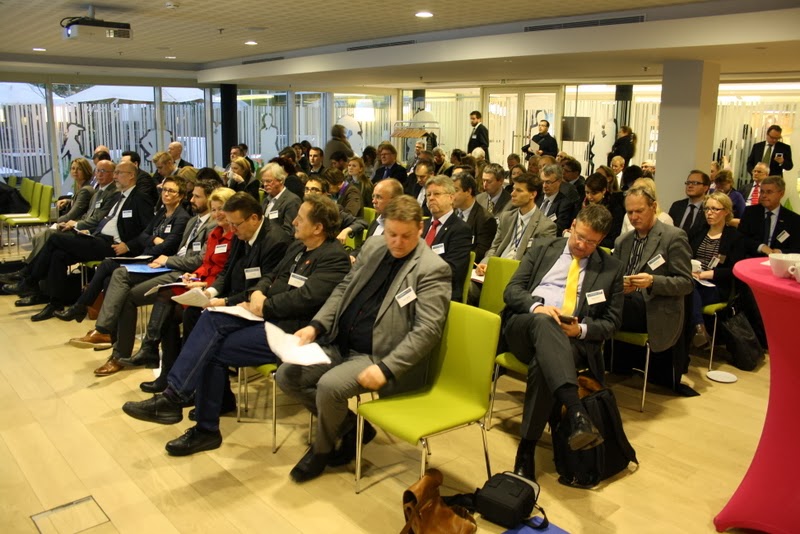
By Andreas Raspotnik and Kathrin Keil On November 26, 2013 the North Norway European Office held a seminar on “Humans in the Arctic”, in collaboration with Arctic Frontiers 2014, The Arctic Institute and Maritimt Forum Nord. The seminar took place in conjunction with the annual conference Arctic Frontiers, to be held in Tromsø (Norway) from January 19th to 24th, 2014.

In two sessions, one on Growth and one on Governance and Cooperation “Humans in the Arctic” addressed the emerging environmental and social challenges as well as economic opportunities that arise from the continuous development of the European and in particular Norwegian Arctic. With the European Union and its institutions, and other European stakeholders from industry and research showing increasing interest towards these developments, the Norwegian North is a key area in bringing together old and new actors, and thereby fostering a sustainable future for the European Arctic.

More than 100 participants from politics, industry, research and academia paid careful attention to the introduction by Runar Sjåstad, County Mayor of Finnmark County and the two Members of the European Parliament, Jens Nilsson and Paul Rübig.


Anne Husebekk, rector from the University of Tromsø (UiT), introduced the 1st session and gave an overview on the increased global attention on Arctic development and its expected economic growth. The Tromsø High North Cluster can play a crucial role in providing the necessary knowledge for sustainable development in the Norwegian Arctic. In that regard Dan Tuppen, Vice President for Exploration, Barents Sea and Norwegian Sea from the energy company Statoil highlighted the potentials of the Barents Sea as a future source for European energy supply. However, Tuppen outlined the risks and long-term considerations attached to Arctic maritime drilling. With Arctic shipping often being perceived as the top-seller of Arctic economic development, Hanna Lee-Behrens, Director of the Department of Safety, Environment and Innovation from the Norwegian Shipowners’ Association, discussed related maritime opportunities and challenges in the High North. 

courtesy of Torjus Kandal
In that regard she presented the report “High North – High Stakes. Maritime opportunities in the Arctic”, which draws on conclusions and data from a related report published by The Arctic Institute. As especially intra-Arctic shipping is expected to grow, Lee-Behrens emphasized the necessity of a mandatory Polar Code, currently developed by the International Maritime Organization (IMO) and its member states. In addition to maritime transport deliberations fishery plays a crucial role for economic considerations in the Barents Sea region. Trygve Myrvang, Managing Director from the Norwegian Fishermen’s Sales Organization, outlined questions on the sustainability of fish stocks in the Norwegian North. 

In order to sustain the current success story Myrvang underlined the necessity of cooperation between the fishery and energy industry in the High North, both interested in the same offshore areas. Filip Hamro-Drotz from the European Economic and Social Committee (EESC) concluded the first session and critically assessed the interaction between civil society and businesses in the European Arctic. He urged the representatives from the European Arctic to particularly focus on their competitive advantage in the area and continuously stress their needed knowledge and skills.

The speakers in the 2nd session focused on on-going challenges concerning governance and cooperation especially with regard to the Arctic Council and the European Union’s related Arctic policy steps. Anne Kari Ovind, Deputy Director General of the Norwegian Ministry of Foreign Affairs, highlighted the official Norwegian perspectives of and approaches to fruitful cooperation in the Arctic. Nicola Payne, Second Secretary, Mission of Canada to the European Union, continued by outlining the Canadian goals set for its two-year Arctic Council chairmanship. 

Additionally Mrs Payneemphasized several key elements of the recently agreed on EU-Canadian trade agreement as a platform to also bilaterally cooperate on circumpolar issues. Ole Kristian Bjerkemo, Chair of the Arctic Council’s Working Group on Emergency Prevention, Preparedness and Response (EPPR) gave an overview of the maritime cooperation efforts negotiated under the auspice of the Arctic Council, the Arctic Search and Rescue Agreement and the Agreement on Cooperation on Marine Oil Pollution Preparedness and Response in the Arctic. Matthew King, Head of Unit: Maritime policy, Atlantic, outermost regions and Arctic in the European Commission’s Directorate-General for Maritime Affairs and Fisheries, concluded the session. King advanced his opinion that the European Union has to (finally) activate its Arctic policy and related funds more effectively. Furthermore, the European Union should also seek to develop its Arctic policy ambitions outside the Arctic Council.

Final remarks were given by Ole Øvretveit, Conference Manager of Arctic Frontiers and Tomas Norvall, Chair of Nordland County Council and Board Member of the Norway European Office.

Arctic Frontiers 2014 under the theme “Humans in the Arctic” will focus on two main subject areas: 1) health, society and environment and 2) maritime operational challenges. The provisional policy section program can be downloaded here, the one for the science section here. The Arctic Institute, which will be represented by its members Malte Humpert, Kathrin Keil and Andreas Raspotnik, will host a side event on infrastructure related challenges in the Arctic.


In or Out? The Symbolism of the EU's Arctic Council Bid


For the Norwegian version of this article, see the North Norway European Office.

By Andreas Østhagen Since launching its first Arctic communiqué in 2008, the European Union has strived to be accepted as a legitimate Arctic actor. Gaining observer status in the Arctic Council, an increasingly prominent international forum, seems to constitute the primary step towards such recognition. Yet the EU's symbolic quest to join the Arctic Council as an observer has proved disproportionately long and difficult.

The final result, as laid out during the Arctic Council's recent ministerial meeting in Kiruna, Sweden, reveals the true extent of the in-group/out-group symbolism characterising today's Arctic debate – a differentiation as important for Arctic states as it is for the EU. Exploring this differentiation, the following article will take a look at the rationale behind the EU’s engagement in the region and its developing Arctic policy, before assessing what its relationship with the Arctic Council actually symbolises.

Explaining an Arctic Interest
Underpinning the EU’s relatively sudden vocalisation on Arctic matters is its transforming role as a foreign policy actor [1]. For Sweden, Denmark and Finland, the Arctic represents an area of both domestic and foreign policy due to their status as Arctic states, and subsequently as full members of the Arctic Council. The EU itself tends to emphasise foreign policy more strongly in its Arctic discourse, whilst also using domestic policies to legitimise its Arctic engagement.

The EU enjoys strong geographic proximity to the region, but as Kathrin Keil highlights, there are also multiple policy areas in which the EU demonstrates a vested interest in Arctic development, including new trans-polar shipping routes, energy imports from the Arctic, EU-funded polar research and fisheries activity, in addition to regional policy tools and mechanisms [2]. As such, the developments taking place in the Arctic region are undoubtedly of relevance and importance to the EU, though this in itself may not be enough to prove the EU’s legitimacy as an Arctic actor.

The path towards an EU Policy for the Arctic
The first official step towards an EU Arctic policy arose in November 2008 when the European Commission published a communiqué titled, «The European Union and the Arctic Region». It emphasised three issues: (1) enhancing Arctic multilateral governance; (2) preserving the Arctic climate; and (3) promoting the sustainable use of natural resources [3]. Reactions to this first Arctic policy initiative were mixed. Although many Arctic actors expressed support for the EU’s engagement in the region, others perceived the EU as trying to address problems that were not particularly pressing, namely governance, resource management, and the environment [4].

Taking such interests into account, the Commission waited until June 2012 to release a new communiqué – a second and arguably more moderated step on the path towards an EU Arctic policy. The three overarching themes from 2008 were replaced by: (1) knowledge and competence; (2) funding and promoting sustainable use of resources; and (3) engaging in international cooperation[5].

The 2012-communiqué is striking not for what it contains, but for what it omits. Although the focus points in 2012 do not differ greatly from that of 2008, some of the more sensitive issues and top-down approach are excluded from the document. Removed are the references to governance gaps, proposed new frameworks for the Arctic and the portrayal of the EU as an Arctic crusader. While relatively more concrete, the measures themselves appear to be somewhat random; a laundry list of what the EU has done, and plans to do, with relation to the Arctic. The communiqué therefore lacks an overarching purpose, in a reversal upon the communiqué in 2008. The 2008 communiqué outlined a clear strategy, albeit controversial, while the 2012 communiqué indicates a new wariness of the interests over other Arctic actors.

Courtesy of Delegation of the EU to Russia
http://goo.gl/wU3Ei
The EU and the Arctic Council
The clearest explanation for the EU’s altered approach towards the Arctic lies in its ambition to become an observer to the Arctic Council. Since 2008, the EU has stated that such a status is important for its future engagement in the region [6]. Its bid in 2009, however, was vetoed by Canada, which stated that “Canada doesn’t feel that the European Union, at this stage, has the required sensitivity to be able to acknowledge the Arctic Council... “[7]. This was attributed to the EU’s 2008 import ban on seal products, which was particularly contentious for Canada. At the ministerial meeting in 2011, the decision concerning observer status applicants was deferred again until 2013.

The EU (represented by the European Commission) has nonetheless been attending Arctic Council meetings as an ad-hoc observer by consecutively requesting participation. In reality, the coveted position as a ‘permanent’ observer does not entail much more than a regular invitation to attend Arctic Council meetings and the opportunity to contribute to its working groups, an option already available to ad-hoc observers [8]. The emphasis the EU has placed on achieving observer status is thus more symbolic than tangible in nature: being accepted as an "in-group" member confers more legitimacy as an Arctic actor than the practical outcome of the status in itself.

Kiruna Ministerial Meeting 2013
The foreign ministers of the eight Arctic states met in Kiruna in mid-May this year to conclude the two-year Swedish chairmanship of the Arctic Council, returning the reins to the first chair of the Council, Canada. Much has been written about the increased influence of the Arctic Council, with particular attention paid to the new applicants for observer status. In a much-anticipated move, it was decided that China would be accepted as an observer, in addition to Japan, Singapore, South Korea, Italy and India. While the EU's bid was "affirmed", a final decision on the issue was deferred once more amidst the persistent dispute with Canada over the EU’s import ban on seal products [9]. EU officials greeted the decision with cautious optimism, with Erkki Toumijou, foreign minister of Finland, soon stating that a resolution might take no longer than a few months [10].

In or Out: The importance of symbolism
There are multiple processes underway in the Arctic Council’s deliberations. As already argued, the EU has been working vigorously to become accepted as an observer to the Arctic Council – not for practical rationales but as a means to enhance its credibility as an Arctic actor. Simultaneously, the Arctic states, and Canada in particular, have been using their veto powers to signal the difference between Arctic and non-Arctic states, highlighting their dominance in Arctic matters. Canada subsequently uses its veto power to emphasise its sovereignty in the Arctic.

Critical to this is the symbolism surrounding the export of seal products, which may not hold great economic weight in EU-Canada trade relations, but remains of grave importance to the local indigenous peoples living off such activities. The seal ban issue thus becomes pivotal to Canada’s self-portrayal as an Arctic nation, while symbolising the inherent conflict between Arctic and non-Arctic actors. Given the lack of practical benefits conferred by observer status in the Arctic Council, the main issue is simply symbolic: who is in or who is out, and who has the power to decide. Consequently, the EU is kept “out” of the Arctic Council by Canada, and will remain so until a solution that favours Canada has been found. At the same time, by affirming the EU’s bid, the Arctic Council has taken steps to ensure that the EU will remain engaged with the Council on its path to achieving observer status.

Conclusion
As international actors articulate an interest in the developments in the Arctic, legitimacy becomes the predominant issue. Such legitimacy confers access, power, influence and opportunities. The Arctic Council, an intergovernmental forum which up until recently was largely peripheral, has been given the role as the official gatekeeper of the region. Contributing to this is the Council’s inclusion of indigenous peoples, its vow not to deal with hard security issues and the active participation of Russia.

In the run-up to the recent Kiruna ministerial meeting, the decisions on the multiple observer status applications were highly anticipated. Although the benefits of this status are limited, it remains of great symbolic value to those obtaining it, especially as the dichotomy between Arctic and non-Arctic actors intensifies. From the perspective of the Arctic Council, had countries like China or Japan not been granted access to this arena, it might risk becoming less relevant, and therefore less legitimate, as other international fora develop. The same reasoning applies for the EU, as the Arctic states struggles with the ambivalence of wanting the EU close, but not too close.

Despite starting out with lofty ideals about its Arctic engagement, the EU has been forced to re-adjust and modify its approach to the region as access to the Arctic Council has gained primacy. Its conflict with Canada, of life-altering consequences for indigenous peoples and of symbolic significance to Canada as an Arctic nation, will determine if and when the EU might develop from being an Arctic outsider to an Arctic insider. In the current situation, however, the EU is caught in between.


Sources:
[1]. Duke, S. (January 2008). The Lisbon Treaty and External Relations. EIPASCOPE, p. 13-18.
[2]. Keil, Kathrin (October 2012). The EU as a Prospective Permanent Observer to the Arctic Council: Footholds, Virtues, Concerns and Obstacles (Part 1). http://www.thearcticinstitute.org/2012/10/the-eu-as-prospective-permanent.html
[3]. European Commission. (11. November 2008). The European Union and the Arctic Region. Retrieved 5. March 2010 from Communcation from the Commission to the European Parliament and the Council: http://ec.europa.eu/external_relations/arctic_region/docs/com_08_763_en.pdf
[4]. EurActiv. (14. May 2009). EU-Russia summit to focus on 'hard security'. Retrieved 3. June 2010 from EurActiv news article: http://www.euractiv.com/en/priorities/eu-russia-summit-focus-hard-security/article-182320
[5]. European Commission and the High Representative of the European Union for Foreign Affairs and Security Policy. (26. June 2012). Developing a European Union Policy towards the Arctic Region: progress since 2008. Brussels.
[6]. European Commission. (11. November 2008). The European Union and the Arctic Region. Retrieved 5. March 2010 from Communcation from the Commission to the European Parliament and the Council: http://ec.europa.eu/external_relations/arctic_region/docs/com_08_763_en.pdf
[7]. CBC News. (29. April 2009). Canada against EU entry to Arctic Council because of seal trade ban. http://www.cbc.ca/news/world/story/2009/04/29/cda-eu-arctic-seal.html
[9]. Arctic Council. (15. May 2013). Kiruna Declaration.
[10]. European Commission. (15. May 2013). Joint Statement by HR/VP Catherine Ashton and EU Commissioner Maria Damanaki regarding Arctic Council decision on EU's observer status http://europa.eu/rapid/press-release_MEMO-13-440_en.htm 
& Pedersen, Torbjørn. (15. May 2013). Arktisk Råd åpner dørene for Kina. http://www.aftenposten.no/nyheter/uriks/Arktisk-Rad-apner-dorene-for-Kina-7202483.html#.UbX4uedM9IE