Showing posts with label Andreas Østhagen. Show all posts


Ukraine Crisis and the Arctic: Penalties or Reconciliation?
By Andreas Østhagen, April 30, 2014


Canada’s recent decision to boycott an Arctic Council task force meeting held in Moscow is a direct example of how the Ukraine conflict is starting to impact Arctic cooperation. Given its prominent position in the Arctic, however, Russia is integral to most schemes for the region’s future development. As vocalized by both former US Secretary of State, Clinton, and the current Prime Minister of Iceland, Gunnlaugsson, the Ukraine crisis might have a severe and unintended impact on Arctic cooperation [1].

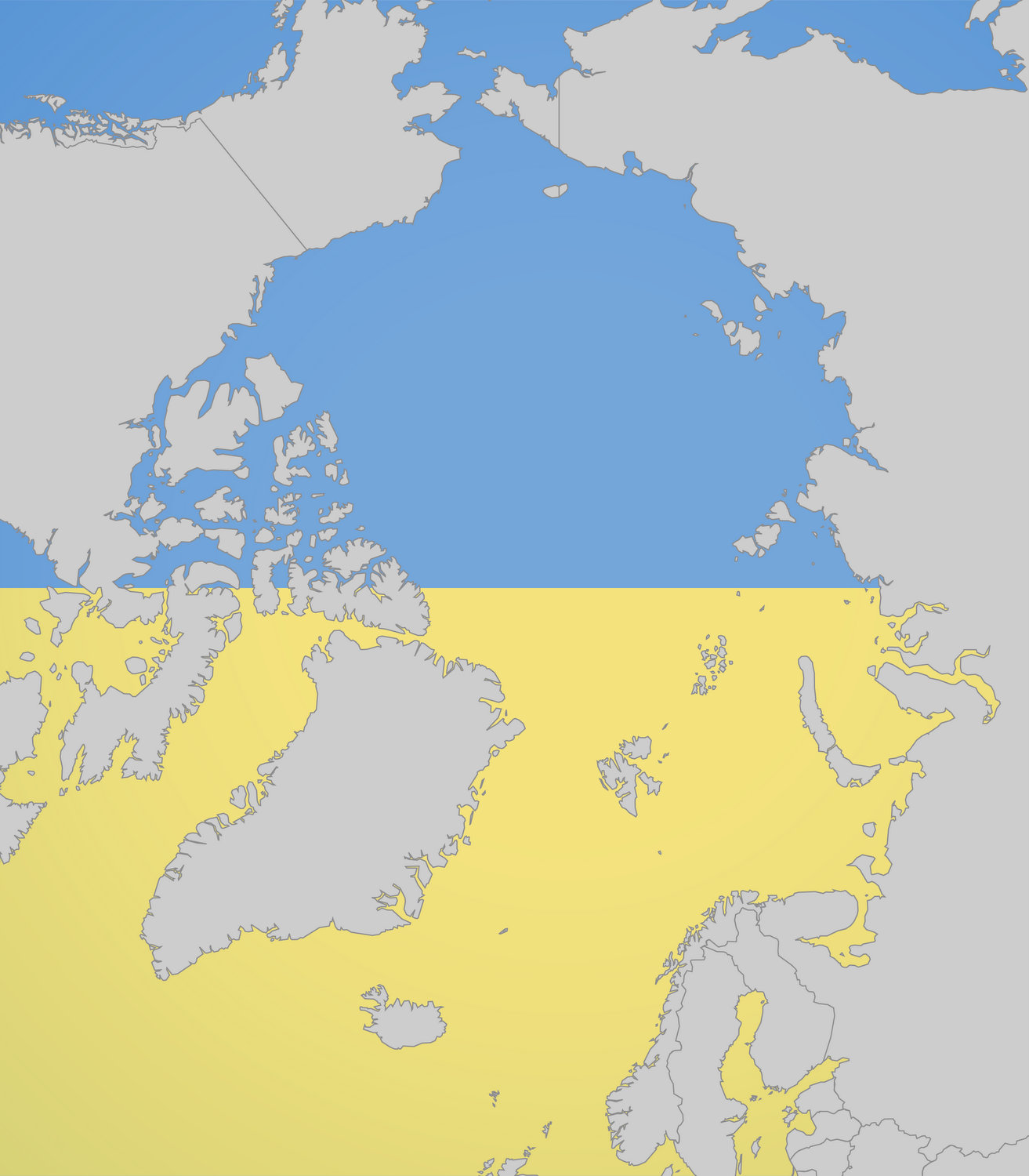
ukraine3-018.jpg

The impact of the events in Ukraine for Arctic cooperation will be neither straight forward nor harmonized across the region. Instead it will vary according to the interests of the different Arctic states. They could decide to use the Arctic as an arena for penalizing Russia further or use it to engage Russia in dialogue. Currently, officials dealing with Arctic affairs are asking themselves what exactly these consequences will be, deciding whether to take further action (like Canada) or issue warnings (like Iceland).

Economic Development

First, the immediate and direct impact of decisions taken outside of an Arctic context could hamper Russia’s strongest interest in the Arctic, namely economic development. Sanctions put in place by the European Union and the United States have the potential to affect the multitude of European and American companies engaged in developing the vast resource potential in the Yamal, Nenets and Kara Sea regions. Highlighting this, on April 28 sanctions were put in place by the US on Rosneft’s president, Igor Sechin [2].

This summer ExxonMobil alone is scheduled to conduct some of the most expensive exploratory drillings in the history of offshore oil and gas development in the Kara Sea through its joint venture with Rosneft [3]. BP is similarly dependent on Rosneft after TNK-BP was incorporated into the Russian oil giant in 2013, leaving BP with 19.5 percent of Rosneft’s shares [4]. Should further sanctions be put in place limiting western companies dealings with Russian energy companies, from either the Russian or the EU/US side, Arctic economic development in Russia will take a hit.

Cancelling Cooperation

In terms of direct cooperation in the Arctic sphere, exclusion of Russia or the boycotting of various Arctic meetings by one or several of the Arctic states have the potential to derail the relatively well-established modes of collaboration that have developed in the Arctic. Canada’s decision not to attend the Arctic Council task force meeting in Moscow last week is a minor, but still significant symbol of how Arctic cooperation is affected by the international crisis further south [5].

Similarly, Russian officials were not invited to take part in a pre-meeting to the North Atlantic Coast Guard Forum in Sydney, Novia Scotia on March 31, where the establishment of an Arctic Coast Guard Forum was discussed. The planned Northern Chiefs of Defence (CHODs) meeting scheduled for June in Iceland seems likely to be postponed as well, as could be expected. The Northern CHODs forum is one of the few arenas, in addition to the Arctic Security Forces Roundtable, where all the Arctic states convene to discuss hard security matters. Consequently several of the informal and formal arenas where civilian and military issues in the Arctic are discussed are put on hold.

Various Interests
Yet, Russia’s participation in the high level Senior Arctic Officials (SAO) meeting under the Canadian chairmanship in Yellowknife on March 25-27 proceeded as planned. In the Arctic Coast Guard Forum meeting it was also pointed out that any coast guard forum for the Arctic without the Russians present would prove futile, given Russia’s predominant role in Arctic maritime matters. For the United States and the Scandinavian countries such an approach seems only logical, given adjacent maritime borders that involve shared fish stocks and natural resource deposits. This highlights the importance of maintaining a working relationship with Russia on specific issues for some of the Arctic states, albeit these interests vary amongst the Arctic countries.

For decades Norway’s collaboration with Russia on the joint management of fish stocks in the Barents Sea has been promoted as a model for dealing with Russia on a sensitive topic that entails both a civilian and a military dimension [6]. Similarly, the 2010 maritime delimitation agreement was highly motivated by a desire in both countries to develop potential petroleum resources in the former disputed maritime area. Related cooperation between Russia and Norway has expanded since [7].

Although Sweden and Finland do not share a maritime border with Russia, Finland in particular has an extensive land boundary and is dependent on a rational working relationship with its larger neighbor. Just in terms of border crossings, Finland issued 1.3 million visas to Russia in 2013, a third of all Schengen entry visas going to Russia, according to the BarentsObserver [8]. As argued by Finland’s Minister for European Affairs and Foreign Trade, Stubb, Finland is heavily dependent on Russia’s economic trajectory and the consequences of the Ukraine crisis might be severe for the Finnish economy [9].

In the Bering Sea the US and Russia have a long standing collaboration on research and management of fish stocks, in particular with regards to the Alaskan Pollock [10]. For the last 19 years Russia and the US have worked together in this maritime area, and as ship traffic is increasing, the need for collaboration is only set to increase [11]. Combatting illegal, unreported, and unregulated (IUU) fishing in the area has already been stated as one of the main goals in the US’ Arctic Implementation Plan from January 2014 [12]. Also, as most vessels frequenting the Bering Sea are fishing boats, the potential northern movement of fish stocks due to temperature increases as seen in the North Atlantic will force the vessels to move further north and demand even greater coordination and collaboration between Russian and US coast guards, similar to what has developed in the Barents Sea.

Russia’s Primacy in the Arctic

The different Arctic states all have their own «special» relationships with Russia, with varying degrees of interdependency and collaboration. Related, it is less counterproductive to Canada’s Arctic interests to take a strong stance towards Russia than it is for some of the Scandinavian countries. The seven Arctic states excluding Russia also do not form any cohesive block against Russia, in part due to the fact that membership in international organizations vary between NATO and the EU (5 NATO members and 3 EU members – only Denmark overlaps).

Yet, coordinated efforts to exclude Russia from specific Arctic forums have been – and will probably continue to be – put in place. We should, however, not forget that Russia is the largest of all the Arctic actors, measured in everything from population to economic activity and resource potential. Efforts to deal with environmental pollution, search and rescue, and common standards in the Arctic have also been developed with a lowest common denominator approach, depending on all the Arctic states engaging and signing up to the agreements. Therefore, having Russia onboard on Arctic-related agreements is not only preferable, but also essential to ensure a responsible development in the Arctic.

Conclusion – An Arena for Penalties or Reconciliation?

In sum, Russia is dependent on a positive Arctic development, while the country is also integral to most of the development in the region. The other Arctic states undoubtedly have an obligation to act on proceedings in Ukraine, yet on a lower working level many of them are heavily dependent on continuing business as usual in various areas where Russia constitutes an essential partner. Therefore, the somewhat inconsistent responses with regards to various Arctic domains are likely set to continue.

In previous periods of high tension between Russia and the west, the Arctic has actually served as a theatre for continued cooperation. A good example of this is the 2008 Georgia crisis where collaboration in the Arctic was almost unscathed, arguably also serving as an arena for normalizing relationships as the crisis ended. What role will the Arctic have this time around? That depends on the extent to which Russia will continue to paint itself into a corner, and whether the other Arctic states choose to use the region as an arena for penalties or reconciliation.


[6] See for example Hønneland, Geir (2007), “International Cooperation and Arctic Governance: Regime Effectiveness and Arctic Governance”, London & New York: Routledge.


To Svalbard and Beyond – The European Parliament is Back on its Arctic Track


To Svalbard and Beyond – The European Parliament is Back on its Arctic Track


Three years after the European Parliament’s (EP) last resolution on Arctic issues[1], the European Union’s (EU) parliamentary institution has adopted yet another non-binding resolution dealing with the EU’s northern neighbourhood in its plenary session on Wednesday, March 12th.
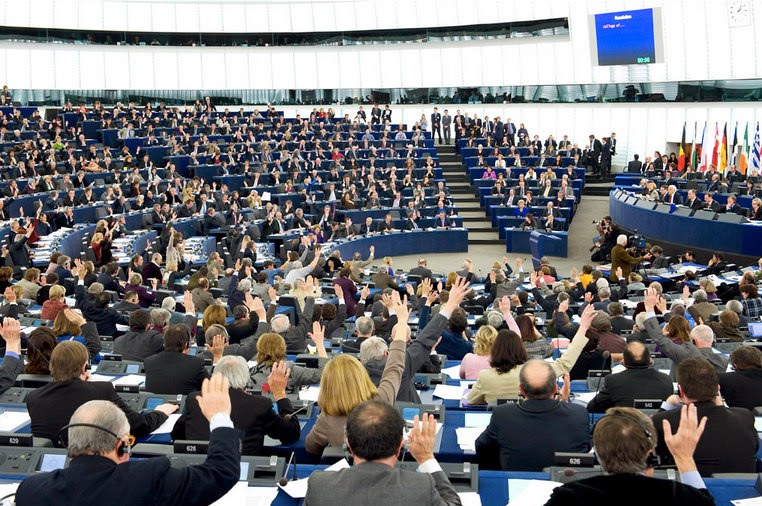
Screen Shot 2014-03-17 at 12.19.23 PM.jpg
Photo: EU Parliament
In the resolution, contentious issues like Svalbard’s Fisheries Protection Zone (FPZ) (see our previous article) are weeded out, and the main point seems to reiterate that the EP is – and should be – taken into account when discussing EU-Arctic matters and creating a respective policy. The Joint Communication by the European Commission (‘Commission’) and the European External Action Service (EEAS) from June 2012[2] was generally well received, and therefore one can wonder why the EP is issuing a third resolution on Arctic matters just before the upcoming elections?

The resolution on an “EU strategy for the Arctic”[3] followed a plenary debate held on April 17th, 2013. After rejecting a motion for a resolution[4] submitted by the Greens/European Free Alliance Group, the EP accepted, and slightly amended, a joint motion for a resolution[5] by the Group of the European People’s Party (EPP), the Group of the Progressive Alliance of Socialist & Democrats (S&D), the Alliance of Liberals and Democrats in Europe (ALDE) and the European Conservatives and Reformists (ECR). In the rather complex EU policy-making process, the EP uses a non-binding resolution in order to promote the institution’s own view and perspective on, for example, a certain foreign policy agenda. An EP resolution is subject to a simple majority and is neither a proper legislative European act nor a simple EP policy paper.

No Rapid Movement
When scrutinizing the EU institution’s policy output, it is necessary to distinguish between the EU’s different voices and its actual legal impact. The EU’s long (official) Arctic journey started in October 2008 with an EP resolution on “Arctic governance”,[6]and the next step may be a Council conclusion issued by the Member States scheduled for May 2014. Although both the EP and the Commission have been considerably Arctic-active, Member States lack a certain interest to put the Arctic on the EU policy table.

Despite this disinterest, some progress has been made. The EP adopted its second resolution in 2011; rather unwieldy titled “A sustainable EU policy for the High North”, it was mainly concerned with stressing the EU’s interests and rights in the Arctic (and its governance structures) by highlighting the EP’s recognition of the Arctic Council (AC) as the legitimate forum for Arctic cooperation. It was the EP’s attempt to straighten up the mess caused by the first resolution in 2008. This relates specifically to a proposed Arctic Treaty, similar to the Antarctic Treaty System, and based on (the EP position of) a supposed vacuum in Arctic governance – the Arctic being “not governed by any specifically formulated multilateral norms and regulations”. It goes without saying that this approach was not very well perceived by some of the Arctic states.

Fluffy terminology
The title of the 2011 resolution can be described as bulky, as both “sustainable” and “High North” are terms extensively used in European Arctic debates, albeit without explicitly scrutinizing its meaning. Terms such as “geopolitics” or “geostrategic importance”, for example, are similarly vague. Almost every international matter of perceived importance has a geopolitical significance to it; yet the meaning and implications of these terms are rarely well defined. “Sustainable development” has become an obligatory imperative when publically and politically discussing the future of the Arctic region, regardless of the vagueness or even triviality of the concept. How does one actually measure the sustainable development of the Arctic?

The “High North”, on the other hand, is an explicitly framed and constructed term by the Norwegian government in order to create an at least Norwegian internal Northern/Arctic awareness, and consequently legitimize future economic development of the region.[7] Arguably, the EP’s usage of both terms in its 2011 resolution’s title indicates awareness of delicate Arctic-related matters and a certain affinity for especially relevant partners. Regardless of the title, the resolution definitely indicates a shift in the EP’s Arctic perception, mainly based on an increased gain of Arctic-related knowledge developed in the EU’s corridors in Brussels and influenced by many different incidents between 2008 and 2011.

Nuancing and differentiating
The 2014 March resolution now adopted in plenary seems to indicate no great alteration in the EP’s policy-approach to the Arctic. It lists numerous aspects that need to be included as the Commission develops the “strategy” further, while it also encourages the Commission to prioritise Arctic policy development to a greater extent than what has been the case in recent years. It seems, however, worth noting that the EP returns to “strategy”, a term perceived rather sceptically by Commission and EEAS officials. The United Kingdom, for instance, did not develop a UK Arctic strategy per se, but an Arctic policy framework, as it is argued that a strategy can only be developed for an area the actor can exercise some kind of control.[8] Regardless of this terminological word play, the EP insistently refers to the EU’s need to ensure legitimacy and local support for its very own Arctic engagement. Additionally the EP “regrets the effects which the EU regulation relating to the ban on seal products has produced (…) in particular for indigenous culture and livelihood”. It will be worth observing if such a statement, irrespective of the resolution’s legally non-binding character, has a positive influence on the Arctic relationship between the EU and one particular Arctic state.

Looking at the different motions from the party groups, some other interesting points stand out. The Greens are, as always, suggesting a moratorium and expresses concern over the so-called “militarisation” of the region. Wisely enough, at least from a general EP point of view, the other party groups have not taken these opinions into the final resolution. The EPP group seems to be particularly harsh with regards to the EEAS and their role as the coordinating authority for the EU’s Arctic policy development.[9] ALDE, on the other hand, calls for increased focus on the European Arctic – a proposal worth considering. As previously argued by The Arctic Institute, an EU Arctic policy should first and foremost be focused on its own Arctic areas, equivalent to what other Arctic states do in their policies, before it tries to meddle in larger circumpolar affairs.

Nevertheless, neither argument was (explicitly) part of the joint motion or the final resolution. However, the EP seems to now finally recognize that “the regions of the Arctic differ substantially” from each other, which is especially relevant to the ongoing international debate over whether Arctic resources, depending on their actual location, should be exploited or not. In that regard, the EP’s new resolution focuses specifically on the various economic opportunities the Arctic holds and related chances for European businesses. Consequently, Michael Gahler, the EP’s rapporteur for the 2011 resolution, emphasizes the EU’s need to “stake its claims”, especially in order to distinguish itself from the increasingly announced Arctic-related interests by Asian states.[10]

Greenpeace also received the resolution positively, indicating an apparent call by the EP to establish a sanctuary in the High Seas area around the North Pole.[11] However, it has to be doubted that the stated backing of the EP to support “the development of a network of Arctic conservation areas and (…) the protection of the international sea area around the North Pole” equals the perception advocated by Greenpeace. In a similar way, a commentary published in the Arctic Journal even falsely referred to an EP push regarding a moratorium on industrial exploitation for the Arctic Ocean.[12] There may be different ways to interpret legislative acts, policy papers or regarding opinions. However, the current EP resolution focuses on economic and industrial activity, in tandem with a “sustainable approach”, which contradicts the highlighted focus by Greenpeace on preservation and protection only.

Conclusion
The main point of the resolution seems to just reiterate the importance of the EP in the EU-Arctic policy-making process. As the Council’s conclusions are scheduled for May, individuals in the EP undoubtedly want to make sure that the EP’s consultative role is not forgotten on this particular issue. Additionally, as with the Svalbard discussion taking place in the previous plenary, many of the MEPs engaged in the issue have constituencies to answer to in the upcoming European election and can use their Arctic engagement to brand everything from environmental consciousness (the Greens) to local and regional development (Swedish/Finnish MEPs). Whether or not the Arctic is an issue that will help improve a relatively low EP-elections turnout, however, is debatable. At least the resolution keeps the Arctic in focus in Brussels – albeit without a clear end-goal in sight.


[1] European Parliament resolution of 20 January 2011 on a sustainable EU policy for the High North (2009/2214(INI))
[2] Joint Communication on “Developing a European Union Policy towards the Arctic Region: progress since 2008 and next steps”, JOIN(2012) 19 final. The communication was analyzed by The Arctic Institute on July 5, 2012.
[3] European Parliament resolution of 12 March 2014 on the EU strategy for the Arctic (2013/2595(RSP))
[6] European Parliament resolution of 9 October 2008 on Arctic governance
[7] For an interesting read seeLeif Christian Jensen (2012). Norway on a High in the North: a discourse analysis of policy framing, Doctoral Thesis, University of Tromsø
[8] As stated by Jane Rumble, Head of Polar Regions Department, UK Foreign and Commonwealth Office at the Arctic Frontiers conference 2014 in Tromsø (Norway). However, the actual difference of strategyand policy framework can be brought into question.
[10] EEP Group in the European Parliament Press Release, 13 March 2014: http://pr.euractiv.com/node/104996
[11] Neil Hamilton (Greenpeace): The European Parliament backs our vision for an Arctic sanctuary, published March 12, 2014 on http://www.greenpeace.org.uk/blog/climate/european-parliament-backs-our-vision-arctic-sanctuary-20140312
[12] Kevin McGwin: EU pushes Arctic sanctuary, in Arctic Journal, published March 13, 2014


From Seal Ban to Svalbard - The European Parliament Engages in Arctic Matters


From Seal Ban to Svalbard - The European Parliament Engages in Arctic Matters

As the European Parliament (EP) is set to pass a resolution on the Arctic in its next plenary session on Wednesday March 12, and a Council conclusion on the issue is scheduled for May [1], the Arctic continues to be on the EU’s policy agenda.
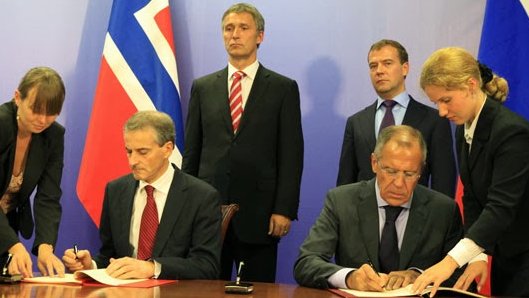
signing of treaty.jpg
Photo: MFA Norway
In its recent plenary in February, Members of the European Parliament (MEPs) discussed several questions posted concerning the legality of the Norwegian interpretation of the Svalbard Treaty, enquiring whether the EU (and its Commission) accepts the Fisheries Protection Zone (FPZ) surrounding the archipelago. This is not the first time a MEP has engaged in that particular issue, as former Vice President of the EP Diana Wallis already sparked a debate on the Treaty and its interpretation back in 2011.

The questions this time around were not primarily focused on the Arctic per se, but instead on fishing rights and potential losses for EU-fishermen in a specific Norwegian Arctic area. The issue itself cannot be separated from larger Arctic geopolitics, however, as the Archipelago of Svalbard and its particular international legal arrangement is an essential component thereof. As such, it also intertwines with the EU’s attempt to develop a coherent and comprehensive policy for the Arctic region. With three months to go before the EP elections are held in May, and with the EU’s status as an Arctic Council (AC) observer still pending, one can ask why this topic has now re-surfaced on the EU’s policy table.

The recent discussion in the European Parliament

The Polish MEP Jarosław Leszek Wałęsa, on behalf of the EP’s Fisheries Committee (PECH), directed questions to Maria Damanaki, the EU’s Commissioner for Maritime Affairs and Fisheries. The questions reflect a fear of losing rights to the fishery resources around Svalbard, as sections of its Fisheries Protection Zone (FPZ) were ceded to the Russian Federation as part of the 2010 delimitation treaty establishing the maritime border between Norway and Russia in the Barents Sea.[2]

As Wałęsa formulated it in two of his five written questions:
  • Does the Commission believe that the Member States which are party to the 1920 Spitsbergen Treaty enjoy equal fishing rights in the Svalbard FPZ?
          and
  • If EU fishermen have lost their right to fish in the Svalbard FPZ east of the Murmansk line, will the Commission consider claims for compensation?
Other MEPs expressed similar positions. Most notably Carmen Fraga Estévez from Spain argued that many EU member states believe that Norway’s interpretation of the Paris Treaty [the Svalbard Treaty] is against international law. Similarly, Maria do Céu Patrão Neves from Portugal expressed a need for the Commission to be firm against Norway and Russia in this matter.

As stated by the Commissioner present, Janez Potočnik, this is a sensitive issue involving one of the EU’s most important partners (Norway) in terms of both Arctic and fisheries issues. The related coverage in Norwegian media already serves as a prime example highlighting this particular addressed sensitivity.[3] In his statement, Potočnik followed a consistent line of argumentation drawing on previous Commission statements on that topic. He highlighted and consequently re-stated a Commission’s 2011 Note Verbales to Norway and its remark that the EU accepts Norway’s practice of the FPZ on the conditions that it is enforced in a non-discriminatory manner and respected by all interested parties.

The Legal Status of Svalbard and its Fisheries Protection Zone

The Svalbard Treaty [4], which was signed 9 February 1920, is a unique combination of sovereignty, internationalization and demilitarization.[5] Coming into force in 1925, the Treaty and its Article 1 respectively, confers the “full and absolute” sovereignty over – the former terra nullius – Archipelago of Spitsbergen/Svalbard [6] to the Kingdom of Norway. However, understood as a diplomatic package deal, the Treaty stipulates that the Norwegian sovereignty is subject to certain conditions, explicitly outlined in the Articles 2 to 9. In particular Article 2 and 3 specify the right of access for maritime, industrial, mining and commercial operations for nationals of all the contracting parties to the territory of Svalbard and its territorial waters. Yet, as the Svalbard Treaty is a pre-UNCLOS (United Nations Convention on the Law of the Sea) settlement, it remains inconclusive if the Treaty applies to maritime areas initially stipulated in UNCLOS, namely the Exclusive Economic Zone (EEZ) and the continental shelf.[7] The Treaty’s wording indicates that it onlyapplies to the territory and the respective adjacent territorial waters of Svalbard. Both legal concepts – the EEZ and the continental shelf – did not exist in 1920/1925 and are consequently not (explicitly) referred to in the Treaty.

Therefore, the terminologically simple, but politically, legally and diplomatically difficult, question is: Do the stipulated rules of equal treatment – “absolute equality” (Article 3) – apply to these post-1982 maritime areas or not?[8]

The Norwegian perception is rather clear – it does not. A few other states, including the Russian Federation, Iceland, Spain, Portugal or the United Kingdom, however, have at least contested part of the Norwegian interpretation, especially with regard to the legality of Norwegian enforcement jurisdiction in the FPZ.[9] In a report to the Norwegian Storting, the Norwegian Ministry of Foreign Affairs recognizes the different views of the geographical scope of the Treaty but simultaneously clarifies its position that the country has always interpreted the Treaty as only applying to the archipelago and its territorial waters.[10] Based on that legal perception Norway did not introduce an EEZ but, in 1977, the now again discussed non-discriminatory FPZ, a 200 nautical mile zone of fisheries jurisdiction around the archipelago. This was intended to ensure the protection and management of the waters’ living resources. However, the indication “non-discriminatory” does only refer to fishing rights for vessels from contracting parties based on their traditional/historical fishing in the discussed area.

It is important to note that the EU is not party to the Treaty but has, based on the principle of “conferral of competence”,[11] certain exclusive[12] and shared (with its Member States) competences with regard to Svalbard (and its maritime areas). Since the FPZ’s establishment, the Commission has issued several Note Verbales to Norway, mainly in response to incidents involving fishing vessels flying the flag of an EU Member State.[13] The aforementioned 2011 Note Verbales, however, stipulates that the EU conditionally accepts the fishery regulations proposed by Norway if these are applied in a non-discriminatory manner, based on scientific advice and respected by all interested Parties (to the Treaty).[14] Neither the Note Verbales nor Commissioner Potočnik explicitly referred to the issue of Norwegian enforcement jurisdiction in the FPZ.

The EU, the Arctic and European Fisheries

Although the questions brought forward in the EP were not of an Arctic character, and rather focused essentially on fishing rights and potential economic losses, it again exemplifies that the Arctic cannot be perceived as one policy area in itself, but rather as a complex web of different policy fields ranging from fisheries to environment to non-living resources and local development. The EU itself, more specifically the European External Action Service and the Commission, has tried to gather all these threads related to different EU-policies in its 2008 and 2012 communications, envisaging a coherent and comprehensive EU policy for the Arctic – a process that is still underway and has consistently been discussed by members of The Arctic Institute in various articles.

The present case further indicates that the EU has to be analysed as an international actor with many, often varying voices. The opinion of one institutional voice does not necessarily or automatically need to reflect the position of another. The debate and the questions posed in the EP highlight a certain lack of regional-related knowledge, or at least misunderstanding. However, they can also be understood as particular national economic interests amongst MEPs in the light of their bid for votes in the upcoming elections to the EP.

Yet, several questions stand out: How can the Commission participate in a bilateral committee, the Joint Norwegian-Russian Fisheries Commission, which actually lies outside the EU’s legal and geographic competences? Why are MEPs using the term “Murmansk line,” a term not used in any specifically related political and scientific discussions? And why ask if “EU fishermen have lost their right to fish in the Svalbard FPZ east of the Murmansk line,” as quotas for the Barents Sea are allocated to third countries regardless of any particular zone but for the entire Barents (and Norwegian) Sea?

Drawing the attention to one of these particular EU-Arctic policy subfields, namely fisheries, the recently reformed EU Common Fisheries Policy (CFP) and its related consequences is of utmost importance. The struggle around the CFP has been long and tedious with the goal of improving what often has been the most prominent example of a failed EU policy.[15] Its recent reform has been branded as a victory for environmentalists, although it still has a long way to go in enforcing the discharge ban in the most troublesome areas of the Mediterranean Sea.[16] Yet, a large part of the fish stocks in EU-waters might not return to a sustainable or harvestable level, due to prior excessive fishing and a lack of regulation.[17] In the Barents Sea, however, the situation is notably different. After decades of joint management of the existing stocks with Russia, the quotas and the yield of cod particularly have reached record levels in 2012 and 2013.[18] This is related partly to a sustainable management regime, in addition to warmer waters and stocks moving north- and eastwards.[19]

Conclusion

As we are nearing the European election to the EP in May, MEPs are getting more active in articulating the concerns of their constituents. With the new, relatively restrictive reform of the EU’s Common Fisheries Policy just in place, and generally high unemployment amongst European fishermen, concerns over the EU “losing out” of potential access in the FPZ around Svalbard are (politically and economically) comprehensible. As this article points out, however, the EU at large (through its Member States that are signatories to the Svalbard Treaty) seems to have chosen to adhere to the protection zone and the Norwegian jurisdiction it implies. This issue ties in with the larger overarching aspiration of the EU to be perceived as a sensible and responsible Arctic actor, whether through its still pending observer status in the Arctic Council, or via its relationship with relevant European Arctic states. With the conflict concerning the ban on seal products from 2009 still unresolved, the European Commission seems to understand the complexities of foreign policy mixed with national resource management based on issues of national sovereignty, and what devastating effect such apparently small issues might have on the EU’s wider Arctic engagement. It will be interesting to observe if the Commission’s and the EP’s or part of its MEPs perspective/approach in this matter will converge or not.


[1] This is, however, the tentative agenda, which might be changed as it has already been done so multiple times before.
[2] Treaty between the Kingdom of Norway and the Russian Federation concerning Maritime Delimitation and Cooperation in the Barents Sea and the Arctic Ocean, Murmansk 15 September 2010
[3] See for example: Eva Aalberg Undheim (2014). Såg ikkje grunn til kritikk mot Noreg. Nationen.no, 1 March 2014 or Terje Jensen (2014). Stiller spørsmål ved norsk suverenitet i Vernesonen. Fiskeribladetfiskaren, 3 March 2014
[4] In Norwegian: Traktat mellem Norge, Amerikas Forente Stater, Danmark, Frankrike, Italia, Japan, Nederlandene, Storbritannia og Irland og de britiske oversjøiske besiddelser og Sverige angående Spitsbergen [Svalbardtraktaten]. Today 42 states are participants to the Treaty, 20 of them Member States of the European Union, seeUtenriksdepartementets traktatregister: http://emeritus.lovdata.no/traktater/index.html
[5] Clive Archer & David Scrivener (1983). Frozen frontiers and resource wrangles: conflict and cooperation in Northern waters. International Affairs, Vol. 59, Issue 1. Pp. 59 – 76
[6] Spitsbergen is the largest island of (the district of) Svalbard. The Norwegian Svalbard Act, Article 1 (Lov om Svalbard, 1925) constitutes Svalbard as part of the Kingdom of Norway and delineates, based on the Svalbard Treaty, its range from range from 74° to 81° north latitude, and from 10° to 35° east longitude.
[7] However, already the Convention on the Continental Shelf (signed in 1958, entered into force in 1964) establishes the rights of a sovereign state over its continental shelf. However, it is UNCLOS (signed in 1982, entered into force in 1994), that defines the sea warded delimitation of the continental shelf.
[8] Concerning Svalbard’s controversial (maritime) legal status, see David Anderson (2009). The Status Under International Law of the Maritime Areas Around Svalbard. Ocean Development & International Law, Vol. 40, Issue 4. Pp. 373-384 and Geir Ulfstein (1995). The Svalbard Treaty. From Terra Nullius to Norwegian Sovereignty, Oslo.
[9] See for example: Brit Fløistad (2008). Controversy over the Legal Regime outside Svalbard’s Territorial Waters. Focus North 6-2008, Den Norske Atlanterhavs Komiteor Erik J. Molenaar (2012). Fisheries Regulation in the Maritime Zones of Svalbard. The International Journal of Marine and Coastal Law, Vol. 27. Pp. 3 - 58
[10] Norwegian Ministry of Foreign Affairs (2005). Opportunities and Challenges in the North. Report No. 30 (2004-2005) to the Storting
[11] Treaty on European Union (TEU), Article 5
[12] For example, the conservation of marine biological resources under the common fisheries policy, Treaty on the Functioning of the European Union (TFEU), Article 3
[13] Molenaar, op. cit., p. 22f
[14] Molenaar, op. cit., p. 26
[15] See for example: Tim Daw & Tim Gray (2005). Fisheries science and sustainability in international policy: a study of failure in the European Union's Common Fisheries Policy. Marine Policy, Vol. 29, Issue 3. Pp. 189 - 197 or Setareh Khalilian & et. al. (2010). Designed for failure: A critique of the Common Fisheries Policy of the European Union. Marine Policy. Vol. 34, Issue 6. Pp. 1178–1182
[16] CFP Reform Watch webpage: http://cfp-reformwatch.eu/
[17] See for example: Karl Mathiesen (2013). Can new EU legislation protect fish stocks. Theguardian.com, 17 December 2013 & Axel Naver (2013/2014). State of EU fish stocks: No improvement in the Mediterranean, but some good news in the North Sea. CFP Reform Watch, 6 January 2014.
[18] BarentsObserver, 12 October 2012.
[19] Research Council of Norway (2010). Currents influence fish stocks: More cod in the Barents Sea. ScienceDaily, 5 May 2010.


Canada and the Arctic: An Ambiguous Relationship


Courtesy of Arctic-Antarctic Collection
By Andreas Østhagen Canada undoubtedly holds a prominent place in the Arctic. Currently in the Arctic, only Russia has more Arctic territory, making Canada an “Arctic superpower” in terms of geography and location. As foreign minister Baird announced on December 9, its recent claim for an extension of its continental shelf claim stretched as far as the North Pole.

Canadian nation-building has at times also been concentrated around its “true north” [1]. Yet, 75 percent of the Canadian population is based within 100 miles from the United States border, more than 1.000 miles beneath the Arctic Circle [2]. Its Arctic population, residing in the three territories Yukon, Northwest Territories and Nunavut, only numbers approximately 100.000 inhabitants, which is less than 0.3 percent of Canada’s total population.

Arctic policies are, for all Arctic states, a mix of domestic and foreign policy. Similarly, in its policy for the Arctic, the Canadian federal government in Ottawa needs to balance the interests of the residents actually residing in its Arctic territories and the foreign policy interests of Canada at large. These different set of interests do not always converge, as this article will attempt to highlight. As a consequence, Canada’s actual Arctic policy can be termed somewhat “bi-polar”, juggling different sets of domestic interest while attempting to formulate a coherent foreign policy approach towards its Arctic neighbors. This juggling is a common trait amongst all the Arctic states, yet the Canadian case is especially pronounced in nature.

Comparing the Arctic Five
All Arctic coastal states are interesting case studies for center-periphery conflicts and the complicate intricacies of formulating foreign policy in tandem with rapid domestic regional development. Alaska holds a special role in the United States, far removed from the lower 48 in both geography and mentality, while forming a cohesive entity pushing for increased federal engagement in everything from resource development to the formulation of a coherent US Arctic policy [3]. In Greenland, consecutive self-governments have put economic independence from Denmark on top of the political agenda, with the idea of full-fledged independence looming in the background, as increased autonomy was granted in 2009 [4].

Courtesy of NSF
On the other side of the Pole, Norway’s Arctic counties (Nordland, Troms and Finnmark) hold 10 percent of Norway’s total population and are, as a consequence, relatively well integrated into the national economy as a whole. There is no marked difference between the Norwegian Arctic and the rest of Norway. Svalbard, being governed by the 1920 Treaty, is a special case with a population of only 2.195 [5]. Russia is in a strong position, with half of the total Arctic territory and a majority of the Arctic population. Just Murmansk oblast has a population of approximately 787.000, which is almost eight times the Canadian Arctic or almost the double of the Norwegian Arctic [6]. At large, the Arctic has a prominent role in Russian contemporary strategic thinking, while also constituting the backbone of its natural resource extraction [7].

Canada: Domestic Policy
Returning to Canada, its three Arctic territories are in a unique situation in terms of regional autonomy. Whereas the ten provinces south of the Arctic Circle have a high degree of autonomy ever since the Dominion was formed in 1867 because of their recognized constitutional powers in section 92 of the Constitution Act (formerly the British North American Act), the three northern territories have not enjoyed the same privileges and operate “at the pleasure of the Crown”.  The regional governments of Northwest Territories, Yukon and Nunavut have a substantially lower degree of autonomy than their southern neighbors, but also compared to that of their American and Greenlandic counterparts.

Nunavut in particular did not become a territory of its own until 1999, decades after claiming its Inuit heritage as separate from the Northwest Territories [8]. Although the federal government in Ottawa is slowly devolving decision-making competence and authority to the territories, the starting point is relatively low, as most decisions are still made by the federal Department for Aboriginal Affairs and Northern Development (AANDC) [9]. It is also the only one of the three territories to not have devolved powers over natural resources.

Frontier Lands
Courtesy of Government of Canada
Turning towards infrastructure and local capacity, the situation is very different in the Canadian Arctic than in the provinces. Every year since 2005 Stephen Harper has travelled to the northern territories and has thus displayed continued Arctic commitment by Ottawa, with promises of investment. As argued by Whitney Lackenbauer, focus in recent years has been on enabling natural resource development in the region, while serious deficiencies in social conditions and at the community level are being neglected.

In terms of infrastructure, there are also no deep water ports in any of the three territories, while the closest search and rescue centers are in Halifax, Nova Scotia, and Trenton, Ontario, well beneath the Arctic Circle [10]. An offshore presence from the Canadian Coast Guard (CCG), in terms of icebreaking capability, is only active in the summer months during the sealift season, when the small communities in Nunavut are being re-supplied. Should a serious incident, in terms of an oil spill or a grounding of a cruise ship, the lack of capacity combined with limited infrastructure might prove catastrophic.

Canada: Foreign Policy
Moving to the foreign policy dimension of Canada’s Arctic engagement, sovereignty has continuously been on the agenda. The current Conservative Prime Minister, Stephen Harper, has placed security issues high on the agenda with quotes like “use it or lose it” and promises of investment in a deep-water docking facility, Arctic capable patrol ships and a new Arctic training centre [11]. The recent claim to the North Pole has similarly been mentioned as a potential source of conflict [12].

Prime Minister Harper in the Arctic
Courtesy of Pmwebphotos
The actual threats to Canadian sovereignty, however, are few and far between. Canada’s territorial disputes in the Beaufort Sea with the United States, and over Hans Island with Denmark/Greenland, are minor, with limited potential of ever becoming more than diplomatic disagreements. The disagreement with the US over the status of the Northwest Passage, as internal waters or an international transit, is also an issue where the two have agreed to disagree, which does not prompt increased military presence in the area. Its recent submission to the UN Commission determining the limits of the continental shelf, is another area where all the Arctic littoral states have agreed to abide to the UNCLOS framework, reiterated continuously since the Ilulissat Deceleration in 2008.

Still, protecting Canadian sovereignty in the north seems a particular foreign policy goal. The results, however, are pending also in this area. Promises of military investments have not been followed through, as exemplified with the Arctic patrol ships. The first ship was initially set to be delivered in 2014, while recent budget leaks now show that construction is set to first begin in 2015 [12]. As a result, the foreign policy rhetoric does not match domestic action. It is consequently not Canadian sovereignty that is under threat in the Arctic, but rather its domestic ability to provide basic public capacities.

Conclusion – Merging Domestic and Foreign Policies
Canada’s Arctic development seems somewhat twofold. On the one hand, Canada actively participates on the international stage in Arctic matters, emphasizing its sovereignty, rights and seabed claims, in addition to its Arctic Council slogan “Development for the people in the North”. On the other hand, domestic development and actual investments are lagging behind its Arctic neighbors, with serious gaps in infrastructure and local/regional capacity. The Canadian Arctic territories are also granted less autonomy and self-governance than the rest of the country’s sub-national units, with a slow process of devolution, in particular with regards to Nunavut.

When Comparing Canada to the other Arctic coastal states, the gap between rhetoric and factual development becomes apparent. Amongst the Nordic countries, the Arctic regions are relatively well enmeshed in nation building at large, while Russia has placed a considerable emphasis on its Arctic region, both rhetorically and in terms of investments. The Greenlandic self-government is in the driving seat of its own development, while Alaska has a particular strong Arctic voice, encouraging Washington to look northwards. Yet, the federal government in Ottawa understands that it needs to engage its Arctic territories, as can be seen by the inclusion of regional representatives in its delegation to the Arctic Council. Inclusion and dialogue, however, is one thing. Actual investments and capacity building is something else, no matter who owns the North Pole.

[1] Under the administrative responsibility of the Minister of Aboriginal Affairs and Northern Development
[5] Only the Norwegian population on Svalbard. source: http://www.ssb.no/befsvalbard