Showing posts with label North Norway. Show all posts

Event Report: “Humans in the Arctic”


courtesy of Torjus Kandal
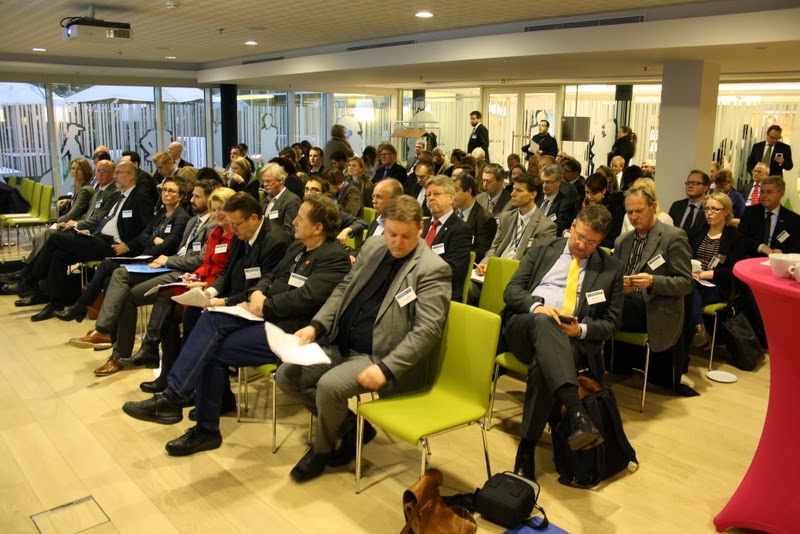
By Andreas Raspotnik and Kathrin Keil On November 26, 2013 the North Norway European Office held a seminar on “Humans in the Arctic”, in collaboration with Arctic Frontiers 2014, The Arctic Institute and Maritimt Forum Nord. The seminar took place in conjunction with the annual conference Arctic Frontiers, to be held in Tromsø (Norway) from January 19th to 24th, 2014.

In two sessions, one on Growth and one on Governance and Cooperation “Humans in the Arctic” addressed the emerging environmental and social challenges as well as economic opportunities that arise from the continuous development of the European and in particular Norwegian Arctic. With the European Union and its institutions, and other European stakeholders from industry and research showing increasing interest towards these developments, the Norwegian North is a key area in bringing together old and new actors, and thereby fostering a sustainable future for the European Arctic.

More than 100 participants from politics, industry, research and academia paid careful attention to the introduction by Runar Sjåstad, County Mayor of Finnmark County and the two Members of the European Parliament, Jens Nilsson and Paul Rübig.


Anne Husebekk, rector from the University of Tromsø (UiT), introduced the 1st session and gave an overview on the increased global attention on Arctic development and its expected economic growth. The Tromsø High North Cluster can play a crucial role in providing the necessary knowledge for sustainable development in the Norwegian Arctic. In that regard Dan Tuppen, Vice President for Exploration, Barents Sea and Norwegian Sea from the energy company Statoil highlighted the potentials of the Barents Sea as a future source for European energy supply. However, Tuppen outlined the risks and long-term considerations attached to Arctic maritime drilling. With Arctic shipping often being perceived as the top-seller of Arctic economic development, Hanna Lee-Behrens, Director of the Department of Safety, Environment and Innovation from the Norwegian Shipowners’ Association, discussed related maritime opportunities and challenges in the High North. 

courtesy of Torjus Kandal
In that regard she presented the report “High North – High Stakes. Maritime opportunities in the Arctic”, which draws on conclusions and data from a related report published by The Arctic Institute. As especially intra-Arctic shipping is expected to grow, Lee-Behrens emphasized the necessity of a mandatory Polar Code, currently developed by the International Maritime Organization (IMO) and its member states. In addition to maritime transport deliberations fishery plays a crucial role for economic considerations in the Barents Sea region. Trygve Myrvang, Managing Director from the Norwegian Fishermen’s Sales Organization, outlined questions on the sustainability of fish stocks in the Norwegian North. 

In order to sustain the current success story Myrvang underlined the necessity of cooperation between the fishery and energy industry in the High North, both interested in the same offshore areas. Filip Hamro-Drotz from the European Economic and Social Committee (EESC) concluded the first session and critically assessed the interaction between civil society and businesses in the European Arctic. He urged the representatives from the European Arctic to particularly focus on their competitive advantage in the area and continuously stress their needed knowledge and skills.

The speakers in the 2nd session focused on on-going challenges concerning governance and cooperation especially with regard to the Arctic Council and the European Union’s related Arctic policy steps. Anne Kari Ovind, Deputy Director General of the Norwegian Ministry of Foreign Affairs, highlighted the official Norwegian perspectives of and approaches to fruitful cooperation in the Arctic. Nicola Payne, Second Secretary, Mission of Canada to the European Union, continued by outlining the Canadian goals set for its two-year Arctic Council chairmanship. 

Additionally Mrs Payneemphasized several key elements of the recently agreed on EU-Canadian trade agreement as a platform to also bilaterally cooperate on circumpolar issues. Ole Kristian Bjerkemo, Chair of the Arctic Council’s Working Group on Emergency Prevention, Preparedness and Response (EPPR) gave an overview of the maritime cooperation efforts negotiated under the auspice of the Arctic Council, the Arctic Search and Rescue Agreement and the Agreement on Cooperation on Marine Oil Pollution Preparedness and Response in the Arctic. Matthew King, Head of Unit: Maritime policy, Atlantic, outermost regions and Arctic in the European Commission’s Directorate-General for Maritime Affairs and Fisheries, concluded the session. King advanced his opinion that the European Union has to (finally) activate its Arctic policy and related funds more effectively. Furthermore, the European Union should also seek to develop its Arctic policy ambitions outside the Arctic Council.

Final remarks were given by Ole Øvretveit, Conference Manager of Arctic Frontiers and Tomas Norvall, Chair of Nordland County Council and Board Member of the Norway European Office.

Arctic Frontiers 2014 under the theme “Humans in the Arctic” will focus on two main subject areas: 1) health, society and environment and 2) maritime operational challenges. The provisional policy section program can be downloaded here, the one for the science section here. The Arctic Institute, which will be represented by its members Malte Humpert, Kathrin Keil and Andreas Raspotnik, will host a side event on infrastructure related challenges in the Arctic.


Norway's Energy Resource Policy and the Future of Bilateral Cooperation in the Barents Sea


By Andreas Raspotnik and Malte Humpert The Barents Sea, a region potentially rich in natural resources, has recently entered the global energy stage. The historic agreement between Norway and the Russian Federation on the delimitation of the maritime border in the Barents Sea in 2010 created a favorable environment for increased hydrocarbon exploration and may usher in a new period of cooperation in the Arctic between the two countries. In spite of the great uncertainty about the actual resource potential in the Barents Sea, and developmental pace and concepts, both Norway and the Russian Federation continue to increasingly develop their Arctic petroleum activities.

Norway’s energy development in a post-North Sea era

Norway’s economic rise as one of the most affluent countries and as one of the world’s largest oil and natural gas producers has its origin with the discovery of the Ekofisk field in the North Sea in 1969. The Barents Sea and its expected vast hydrocarbon resources may become Norway’s North Sea of the 21st century. As more and more North Sea fields begin to mature Norway’s oil production continues to decline. Despite new discoveries and production from fields in the Norwegian Sea, oil production peaked at 3.1 million barrels per day (mbpd) in 2001 and has since decreased by 50 percent.

Norway’s gas production on the other hand continues to grow and in 2011 the country produced around two million barrels of oil equivalent (mboe) per day. Norway’s Snøhvit field, which came online in 2007, may just be the first of a number of developments on the Norwegian continental shelf of the Barents Sea.

In addition to substantial natural gas prospects, the Barents Sea also offers significant potential for Norway to recover from slumping oil production. The Havis and Skrugard fields, both discovered in the last 12 months, have the potential to transform the High North into a new petroleum province. Together they may contain between 400-600 million barrels of recoverable oil. The nearby Goliat field, discovered in 2000 and expected to come online in 2013, contains around 174 million barrels of recoverable oil. If Havis and Skrugard can be developed as rapidly as Goliat, oil may yet regain some of the share of overall petroleum production it lost to natural gas. In addition, the Aldous South prospect in the North Sea, the most significant oil discovery in Norway since the mid 1980s, could end up delivering between 900 million and 1.5 billion barrels of recoverable oil at a time where North Sea fields are facing declining production.


As a result of these new oil discoveries in the North and Barents Sea, the National Petroleum Directorate (NPD) has slightly increased its 5 year forecast and expects production by 2016 to hold steady around 1.6 mbpd, a similar to the one forecasted for 2012. This represents a stark contrast to analysis from as recent as 2008, which predicted that “Norway will have dramatically reduced export volume of oil by 2030 and will barely be an oil exporter by 2030, with only a few hundred thousand barrels of oil available for export in the best case.”

An additional unknown in the future oil developments of Norway is the significant potential off the coast of the Lofoten archipelago. The area may hold as much as 1.3 billion barrels of recoverable oil. Ten of the world’s largest oil companies including Exxon Mobil, Shell, Total and BP, recently spent NOK 540 million (about 95 million USD) to secure the results of a seismic survey conducted around the Lofoten, the Vesterålen, and Senja islands by the NPD.

Environmentalists, however, caution that the area’s extremely narrow sea shelf and the resulting proximity of potential drilling areas to the shore presents significant obstacles to the development of the reserves. The waters around the Lofoten archipelago are home to a number of fisheries and are a spawning area for Northeast Arctic cod. In addition the region is one of the most popular tourist destinations in Norway, representing a significant source of local income. As a result, the question of whether the Lofoten area will be opened up for prospecting has become so contentious that it has been put on hold until after the next Norwegian parliamentary election in 2013. If these areas will be developed may also partly depend on the availability and exploitation of shale gas resources in Europe. Large-scale development of shale gas resources akin to the exploitation in the United States, may result in less demand for Norwegian natural gas and prompt Norway to shift its attention to developing oil deposits, e.g. off the coast of the Lofoten archipelago, instead.

Future Cooperation in the Barents Sea

The 2010 agreement removed a potential source of regional conflict and may act as “appetizer” for future cooperation between Norway and the Russian Federation. The treaty explicitly outlines the rules and procedures for the exploitation of shared hydrocarbon resources (Article 5, Annex II), which has already resulted in positive effects on opening new areas to petroleum exploration. The agreement’s requirement for joint exploitation of potential trans-boundary deposits allows for significant exchange of knowledge and technology.

Norway has started with local seismic mapping of the earlier disputed area in 2011 and already mandated an initial impact assessment study. The Russian Federation plans to begin exploration of the transnational Fedynski Ridge (in Norwegian: Hjalmar Johansen Ridge) later this year. The agreement is the starting point for potential step-by-step development, which could evolve into a new regional petroleum industry.

The significant potential for future petroleum discoveries off the northern shores of Norway will have a lasting impact on the region’s economy, but may also negatively affect the fragile Arctic environment. The maritime delimitation agreement not only offers the basis for an active energy dialogue, the exchange of knowledge on hydrocarbon exploitation, and new partnerships between Norway and the Russian Federation, but could also pave the way to further bilateral environmental cooperation and even closer cooperation of the Joint Fisheries Commission. Collaboration in the Barents Sea may lead to the development of trans-border offshore and onshore infrastructure and simultaneously allow for a holistic trans-boundary management plan which respects the need to balance economic interests and the fragility of the Arctic environment.

This op-ed was originally published by The Institute of the North on March 21st in their weekly newsletter Top of the World Telegraph.


Looking North: Britain’s Revitalised Interest in the Northern Areas of Europe


By Duncan Depledge On 6 March British Defence Secretary Philip Hammond and his Norwegian counterpart Espen Barth Eide signed a Memorandum of Understanding (MoU) ‘On the Enhancement of Bilateral Defence Co-operation’. The MoU provides a political framework for developing and furthering bilateral cooperation and relations in defence and security matters ‘in order to achieve more cost-efficient, more available and more useable capabilities for Norway and the UK and for the [NATO] Alliance’. This agreement with Norway is the surest sign yet of revitalised British interest in the northern areas of Europe. 

As the UK defence community reflects on a decade of “war on terror”, the long-term effects of the 2008 financial crisis and the implications of substantial cuts to defence capabilities, the British government is faced with issues that cut right to the heart of questions about what kind of international presence the UK should have for the purposes of defence. Frustrated by what appears to be a lack of commitment from European partners [1], anxious about whether the US will continue to support NATO [2], and aware that it simply cannot sustain levels of defence expenditure seen during the Blair years [3], the Coalition government has sought defence assurances in bilateral and multilateral partnerships.

While engagement with the Nordic and Baltic countries has been stepped up, it is the relationship with close ally (and Arctic coastal state) Norway which is showing the most tangible signs of progress. The UK’s defence agreement with Norway comes after similar Memoranda of Understandings struck in the last two years on oil and gas exploration, the development of offshore wind farms, a North Sea power grid, biotechnology and scientific/cultural cooperation in the polar regions.  However, it is the latest MoU on defence co-operation which is perhaps the most significant, confirming that Britain’s relationship with Norway and northern Europe more broadly matters to defence and security policy. 


Renewed attention to the so-called Northern Flank is not just about joint capabilities and interoperability. It is also about the increasing relevance of northern (including Arctic) areas to Britain, both politically and economically, themes reflected in the latest MoU. Since the end of the Cold War, the UK has not been a particularly northward-looking nation, as conflicts and interests in other parts of the world have taken precedence.  However, at least three considerations appear to have inspired a shift in thinking.

The first concerns purely defence collaboration. As Britain contends with on-going uncertainty in the Middle East, Africa and Asia, alongside defence cuts, co-operation with Norway and other northern countries addresses security concerns closer to home, offering new possibilities for so-called ‘Smart Defence’. Secondly, as Britain’s economic strength has faltered, the current government has increasingly looked to Nordic countries in particular for routes to the economic prosperity deemed central to UK Grand Strategy.[4]

The third consideration is more long-term. It concerns the strategic significance of sea ice in the Arctic region. The rise in average global temperature which is being driven largely by sustained emissions of greenhouse gases over the past two centuries is forcing considerable changes to take place in the Arctic. The sea ice is melting, both in terms of its extent and its thickness. Sea ice in the summer could disappear almost completely in the coming decade depending on which projections we rely on.[5]Combined with technological development, willing investors and political determination (all of which abounded at the recent
Arctic Frontiersconference in Tromsø, Norway) the opening up of new energy provinces and shipping lanes seems increasingly likely, although not necessarily in the form of a ‘scramble’ as some in the media might imagine.

While the Arctic was not mentioned in the SDSR or the most recent National Security Strategy (NSS), concerns about climate change and resource competition were, and continue to be, indicative of the way in which broader defence and security issues already reach into the region.[6]The potential risks identified in the NSS Risk Register associated with an international crisis, disruption to trade, and concerns about energy could all be relevant in the High North.[7] It is an issue which former Defence Secretary Liam Fox attached a firm importance to, and as this
latest MoU indicates with explicit reference to ‘strategic surveillance and situational awareness in the High North’, part of the rationale for closer defence cooperation between the UK and Norway. As things stand, the Ministry of Defence’s interest in the northern areas ‘has never been greater’, a trend reflected more broadly across Whitehall, especially in the range of issues being actively contemplated.[8]

However, we must not conflate interest with alarm. At present, and we must hope this remains, there are very few problems for the defence community to solve in the Arctic.[9]For the time-being, activities in the North are most likely to be confined to energy development, scientific research and tourism, none of which represents novelty per se. The level of shipping is growing, but from a virtually non-existent base. The attention of the defence community is therefore demanded for other reasons; reasons which now have an added edge to them if Britain is to be a credible partner for her northern allies.

The first reason is a need to map out detailed knowledge of the changes underway in the Arctic, whether physical, political, social or economic. Contrary to what many people in the UK seem to think, the Arctic is not an empty space relevant only to science and economic interests. There are social, political and legal issues to resolve in the region and as the ice melts, it seems inevitable that more and more actors will wish to be involved. There is consequently a need for experts to find out as much as possible about how such change is likely to pan out and to make future-facing judgements about risk and opportunity.

The second reason is the need for British policy planners to appreciate the significance of the changes taking place and the strategic consequences they will have for the United Kingdom. As the recent SDSR demonstrated, much will still have to change before this becomes instinctive. There is a strategic gap as well as a knowledge gap.[10]If we do not know why the Arctic matters to Britain (i.e., what Britain’s interests are in the region), how can we possibly engage with it in any meaningful, let alone justifiable, way?

The third reason is about having relevance in the region: for Britain and for Britain’s defence partners in the North. It is difficult to see how Britain can make a credible contribution to the defence of the northern areas of Europe without detailed knowledge and awareness of the changes taking place there. Moreover, hard questions need to be asked about whether Britain has the physical capability to be relevant in the northern areas, while at the same time maintaining its commitment to other pressing defence issues.

In light of this, recent moves by the current government to demonstrate increased attention to the northern areas of Europe are being received positively, particularly in Norway. The government’s various initiatives to strengthen cooperation through the Northern Group of Defence Ministers and various MoUs is an important step along the way towards knowing your counterparts, developing joint capabilities and interoperability, and appearing as a credible partner. It is clear that there will be regular contact between the UK Defence Secretary and his opposite numbers in northern Europe over the foreseeable future, and this will be an important part of efforts to retain Britain’s relevance in the northern areas of Europe.

While this latest MoU is laden with intent, how closer cooperation between Britain and Norway is to be implemented remains open and will depend on ‘supplementary arrangements’. As such it is fair to ask whether the MoU will prove to be simply discourse, or made to last? The same question can be asked of Britain’s broader efforts to engage with northern Europe and the Arctic region. Unless concrete arrangements are put in place, the intent is likely to slip away.

In the meantime it is worth echoing the calls for renewed attention to Britain’s ‘backyard’ including those areas lying close to or actually north of the Arctic Circle. The future strategic significance of the Arctic remains unclear and with more pressing concerns in Iran, Somalia and the Indian Ocean, it is to an extent understandable that some will treat it as an unwanted distraction. But it is not and the government should be devoting resources to build knowledge and situational awareness of what is happening on Britain’s northern flank, and to establish firm relationships and diplomatic channels with potential partners. Momentum for this is slowly building through the Northern Group and the multiple MoU’s with Norway. However, these efforts must be sustained through active engagement if Britain is to have a credible presence, and more importantly, future relevance in the northern areas of Europe. 


Duncan Depledge is a research analyst at the Royal United Services Institute and a PhD student in the Department of Geography at Royal Holloway (University of London). The article appears in abridged form. It was originally published on 
RUSI.org.


[1] Clara Marina O’Donnell, ‘EU defence cooperation: undermining British interests’, International Affairs(Vol. 87, No. 2, 2011) pp. 419-433.
[2] François Heisbourg, ‘The defence of Europe: Towards a new transatlantic division of responsibilities’, in All Alone? What US retrenchment means for Europe and NATO, ed. Tomas Valasek, (London: Centre for European Reform, 2012) pp. 27-44. 
[3] Malcolm Chalmers, ‘Keeping our powder dry? UK defence policy beyond Afghanistan’, The RUSI Journal (Vol. 156, No. 1, 2011) pp. 20-28.
[4] Sir David Richards, ‘Annual Chief of the Defence Staff Lecture 2011’, RUSI, 14 December 2011, http://www.rusi.org/events/past/ref:E4EA01B5272990/
[5] Steve Cole and Patrick Lynch, ‘Arctic Sea Ice Continues Decline, Hits Second-Lowest Level, NASA, 4 October 2011, http://www.nasa.gov/home/hqnews/2011/oct/HQ_11-337_Arctic_Sea_Ice_Decline.html
[6] Duncan Depledge, ‘Arctic Assembly: The Polar Policies of the United Kingdom’ in Knowledges, Resources and Legal Regimes: The New Geopolitics of the Polar Regions, eds. Richard Powell and Klaus Dodds (forthcoming).
[7] Used here to denote the Eurasian side of the Arctic region.
[8] Private interviews with staff at the UK Ministry of Defence, September-December 2011. 
[9] For a recent audit of UK Arctic interests see Duncan Depledge and Klaus Dodds, ‘The UK and the Arctic: The Strategic Gap’, The RUSI Journal (Vol. 156, No. 3, 2011) pp. 72-79..
[10] Depledge and Dodds, op cit.


An Interview with Nina Jensen, Conservation Director at WWF-Norway


by Tom Fries In February 2012, Arctic Institute contributor Tom Fries interviewed Nina Jensen, Conservation Director at WWF-Norway, about the challenges of pushing back against the habit of fossil fuel production and use in the High North. Her long time work with WWF has given her a sense of the daunting challenges that confront those who support an as-soon-as-possible conversion to renewable energy, but also of the deep value of such a change. You can find a non-flash version of the interview here. 

Interview with Nina Jensen by The Arctic Institute

The Arctic and the Need for Greater Differentiation in a Non-Coherent Region


by Andreas Østhagen No country in the world discovered more oil and gas reserves than Norway in 2011. Some of these new discoveries are located in the Barents Sea, which resulted in the CEO of Statoil exclaiming that the North has become a new ‘oil region’ [1]. Resource development was also the topic of the annual Arctic Frontiers conference in Tromsø, from the 20-25 of January, where businesses and policy makers met to discuss the ‘energies of the High North’. Four days after the conference ended in North Norway, Satu Hassi, a Member of the European Parliament from the Green party, opened an exhibition in Brussels aimed at highlighting the threat of human activities to the ‘vulnerable Arctic’ climate. Consequently the Arctic debate seems polarized in media and academia alike. This does not, however, imply an unavoidable and underlying conflict of interests. Arguably, it symbolizes a greater need for differentiation between the different parts of a region which rivals the size of entire continents [2].  

The atmosphere at this year’s Arctic Frontiers conference was in stark contrast to that of last year. Whereas the 2011 topic ‘Tipping Points’ focused on the climatic changes in the Arctic, this year’s theme was directed towards businesses and local industry, as energy producing activities move northwards. Regions and companies alike lined up to promote their excellent track records when operating above the Arctic Circle. Words like ‘sustainable’, ‘local’, and ‘opportunity’ flourished: “The Nenets-region in Russia has the best infrastructure for industrial development. The University of Tromsø is the best place to establish new Arctic research. Statoil is the most responsible of the Arctic oil companies.” These and other statements all contributed to a general euphoric sentiment, where North Norway and the greater Arctic will benefit widely from new industrial activities, both offshore and onshore.

In Brussels, however, the focus in last week’s seminar was not on local or regional development, but on how vulnerable the Arctic environment has become as the amount of activity increases. This is by no means a change in the Brussels-discourse described in previousarticles by The Arctic Institute. Instead, it stems from the geographical position of the EU-capital, located far away from the Arctic territories. It seems understandable that officials and politicians from more southern countries are not preoccupied with, or in need of, acquiring an nuanced conception of the Arctic region. Combine this with the pro-active work done by some environmental NGOs, and you get a portrait telling the story of a vulnerable, distant, and inhospitable region inhabited by different indigenous communities that now find their traditional existence threatened.

This is not an inaccurate portrayal of the region, as parts of the Arctic are inhospitable and vulnerable indeed. However, if one defines the Arctic region as everything above the Arctic Circle, then such a portrayal is only one of many. The Arctic region spans 24 time zones, 8 countries, and three continents. Its territory is six times as large as the EU 27[2]. In addition, due to the Gulf Stream, the Norwegian Arctic coast and the waters of North-West Russia are completely ice free even during the coldest months of the year, setting them apart from the ice-covered waters of North Alaska and Canada. Drifting sea ice, darkness and low temperatures are no doubt common traits in the region, but the climatic conditions vary across the Arctic region.

Furthermore, there are considerable differences between parts of the Arctic in terms of level of development, culture, infrastructure, and resources. The way of life in the university city of Tromsø is different from the industrial and naval city of Murmansk, and these cities are relatively close to one another. If one also considers the differences between the local Inuit communities in North-West Greenland, and the oil producing towns on the North Slope in Alaska, it is apparent that the Arctic is by no means one coherent region. In contrast to some of the ice-covered and desolate Arctic territories, other parts of the Arctic are heavily industrialized, with significant economic production since the 1970s. The North Slope of Alaska and the Yamal region in Russia have for decades been supplying North America and Europe with much needed oil and gas. Additionally, other activities such as forestry, mining, fisheries, and metal production have had, and will continue to have, a prominent role in many communities above the Arctic Circle.

Subsequently there exists a need to more carefully differentiate and distinguish the various sub-regions in the ‘Arctic debate’, especially as the interest for the region continues to increase amongst academics and media alike. A few years ago the scientific interest for the Arctic was mainly found in the faculty of natural sciences, with emphasis on climate change and bioprospecting. Arctic research has, however, evolved more recently to encompass the wider spectrum of sociology, economy, political science and law, as represented by the existence of institutions like The Arctic Institute.

Media and politicians alike have realized the ongoing changes in the Arctic, and for better or worse have started using the region for their own benefit, e.g. to increase sales of a magazine by writing about conflict in the Arctic. ‘Non-Arctic’ media like The Guardian, The Financial Times, and The Economist have all written long pieces on this ‘new’ region. Politicians, like Russia`s Vladimir Putin, the Norwegian Foreign Minister Gahr Støre, or Canada`s Prime Minister Harper, all use the Arctic actively in their discourse to promote national identity in their domestic and foreign policies. The Arctic has become ‘sexy’; as an exotic region symbolizing climate change, and economic potential. Moreover, the region has not proven to be very politically sensitive or relevant, as it is often located far away from the volatile issues usually dominating national and international politics. Indeed, there are conflicts of interest in the region. But these are not the topics that make or break a bid for President or Prime Minister.

Even in Brussels, located multiple flights away from the Arctic Circle, there are Arctic seminars and conferences on a monthly basis, exemplified by the recent European Parliament exhibition. In a month’s time, Brussels will again be the location for an Arctic seminar, when on March 6th Statoil and North Norway will discuss the relevance of European Arctic oil and gas development in the European Parliament. Again, the contrast between the ‘environmental’ and the ‘industrial’ point of view becomes apparent. And this is exactly where a distinction is needed, to avoid polarization between interest groups that in the end are often discussing different parts of the Arctic region.

The March 6th seminar on developing Arctic oil and gas has indeed made such a distinction, taking into account that the ‘European’ Arctic faces fundamentally different challenges, in part due to a different climate than the North-American or Russian Arctic. While scientists and journalists writing about the Arctic are without a doubt aware of the differences between various Arctic regions, these nuances are often not mentioned in the general Arctic debate. As a result, conflicts in the international debate (i.e., in Brussels) between the environmental, the industrial, and the local/regional interests often derive from this lack of specification. In the end, all these interest groups could benefit from improved regional differentiation.

There are without doubt contentious and volatile issues in the Arctic due to multiple competing interests. But often times these issues are fundamentally unrelated. For example, certain commonly discussed oil and gas developments will not impact the lives of indigenous communities mainly due to the lack of geographical proximity: The continuation of oil and gas drilling in the Barents Sea has little to do with the protection of Greenlandic and Canadian indigenous communities. One interest group which may in fact not benefit from a more differentiated and nuanced debate about the Arctic may be the general media, which too often seems to portray the Arctic as a region of conflict. For the rest of us, on the other hand, ‘Arctic détente’ would be a welcome sight.

Sources:

[1] News article in Norwegian media, after the discovery of the field ”Havis”. http://nrk.no/nyheter/norge/1.7945806
[2] The Arctic Ocean (approx. 14 000 000 square kilometers) and the Arctic landmass above the Arctic Circle (Russia, Canada, Norway, Finland, Sweden, The United States, Greenland) altogether comprises of 30 000 000 square kilometers, which equals the size of Africa. http://arctic.ru/arctic-facts, https://www.cia.gov/library/publications/the-world-factbook/geos/xq.html 
[3] Malte Humpert, "Petroleum Discoveries 2011 in mboe," based on data from aftenposten.no retrieved February 23, 2012 from http://www.aftenposten.no/okonomi/innland/Nordsjoen-var-langtfra-tom-6633132.html#.T0aUiJy2G4F


Is the European Union Missing Another Window of Opportunity for Arctic Energy Resources?


by Andreas Raspotnik On November 18th the Norwegian Ministry of Foreign Affairs presented its White Paper on the High North - “The High North – Visions and Strategies”. This strategic policy update is supposed to set the course for the Norwegian High North Policy for the next 20 to 30 years. 

The region has been identified as an essential new energy province in Europe, embedded in an environment of geopolitical considerations, upcoming challenges and widespread opportunities. The European Union and its member states have been mentioned in the context of several cooperation mechanisms, e.g. the Nordic Dimension, bilateral (energy) cooperation between Norway and EU member states (in particular France and Germany) and enhanced forms of dialogue between Norway and the EU’s institutions [1]. 

Simultaneously, the Norwegian Minister of Petroleum and Energy, Ola Borten Moe launched the first impact assessment study in the Norwegian sector of the earlier disputed Barents Sea area with the aim to open the concerned waters for offshore drilling. The bilateral maritime delimitation dispute between Norway and the Russian Federation was settled on September 15th 2010. Besides specifying the maritime boundary, the treaty also sets out procedures for the development of any gas or oil field straddling the new boundary. The treaty entered into force on July 7th 2011.

The next day, Norway started its first expedition, engaging in data collection and seismic mapping in the newly established border area [2]. The Norwegian Petroleum Directorate expects the first significant results to be obtained by winter 2013. In addition, Statoil, Norway’s leading Energy Company, just announced efforts to reinforce its investments in Arctic projects, focusing particularly in the recently discovered and highly assessed Skrugard oil field [3].


The Barents Sea, an area considered to be both economically valuable and strategically important, is on the verge to be internationally revitalized after 40 years of economic stagnation and regional significance.

The EU is fully aware of the recent developments and manifold opportunities the Barents Sea and Arctic region in general provide [4]. Maria Damanaki, the European Commissioner for Maritime Affairs and Fisheries, recently addressed Arctic challenges, emphasizing the strategic partnership between the EU and Norway and clarifying the EU’s position to become an influential actor in the Arctic – “the golden rule is to get in early” [5].

Currently, Norway supplies 20 percent of the gas consumed in EU member states, making it the Union’s second largest supplier of gas. Most of the exports go to Germany, the UK, Belgium and France, where Norwegian gas accounts for between 20 and 35 percent of the total gas consumption [6]. For the current decade the Norwegian gas production is supposed to reach between 125 and 140 billion cubic meters, compared to almost 100 billion cubic meters in the last decade [7].

Natural gas will continue to play a key role in the EU’s energy mix, as outlined in Energy 2020, the EU’s 10-year energy strategy. The strategy emphasizes the necessity of a strong international energy partnership, notably with the EU’s neighbours, calling for the establishment of privileged energy partnerships with key partners [8]. 

Norway features prominently in most of the policy documents that describe the process toward a common energy policy for the EU. Long term energy cooperation, facilitating sustainable and environmentally friendly exploration, was already considered by the Commission in 2008 [9] and further addressed by the President of the European Commission, José Manuel Barroso [10]. “The EU definitely wants to expand cooperation with Norway”, János Herman, the EU Ambassador to Norway, reconfirmed at the recent Arctic and Northern Areas Conference in Bodø (Norway) [11].

Yet only a bilateral EU-Norwegian Energy Dialogue, with annual meetings at Commissioner/Minister level, was established in 2002. This dialogue principally aims at the coordination of energy policies, including research and technical development and the possible exploration of hydrocarbon resources in the High North. However the High North was only added to the European political discourse in 2006.


In September 2011 the European Commission adopted its Communication on security of energy supply and international cooperation. This Communication is supposed to set out the first comprehensive and coherent strategy for EU external energy policy. Focusing on the establishment of EU partnerships with its key energy suppliers, the Commission emphasizes the potential of the EU-Norway Energy Dialogue to be further enhanced and extended [12]. Energy partnerships are aimed to promote EU’s key principles, including energy security, safety standards, regulatory cooperation, energy efficiency and research and innovation.

The current developments in the Barents Sea can be regarded as both a temporal and structural “window of opportunity” for the development of a privileged energy partnership between the EU and Norway, with obvious advantages for the EU.
  • Upgrade the relationship with Norway and enhance its cooperation:

    A strategic energy partnership, e.g. called the “new framework agreement on strategic partnership and cooperation in the 21st century”, could be based on several key points, inter alia: confidence, security and predictability. This envisaged framework agreement could continue to develop the cooperation efforts, outlined in the EU-Norway energy dialogue, and further set out general obligations and specifically define elaborated goals of cooperation.

    Both the EU and Norway share similar visions, values and norms with regard to resource exploitation, energy efficiency and environmental protection: affordable – reliable – clean. It is in the strategic interest of the EU to strengthen the cooperation efforts and ensure that international/European environmental standards are implemented at all times. An energy partnership agreement could design specific policy approaches and instruments regarding the European Arctic, encapsulating energy needs and environmental concerns.


    European officials have to answer the following question: how can the EU, which assumes a leadership role in fighting global climate change and in promoting sustainable development, influence relevant external actors to act consistently with the EU policy pertaining to energy (security of supply agenda) and climate policy?

  • Strengthen Arctic cooperation and draw on your allies

    Norway is considered the most logical ally to cooperate regarding a more committed and coherent EU Arctic strategy. The bilateral relationship is governed by the EEA-agreement (European Economic Area), obliging Norway among other things to implement the EU’s internal energy market legislation. The country further supports the Commissions application as a permanent observer to the Arctic Council.


    A privileged energy partnership could not only strengthen the necessary cooperation, it could further be identified as a strong political commitment of the EU to the Arctic region. The two partners could act with one powerful voice with regard to the implementation of common international environmental standards concerning hydrocarbon resource exploitation, fisheries and navigation. The purpose of the framework agreement is to agree on joint actions to implement the measures required.


    Hence, the current developments in the Barents Sea could also function as an initial point for a trilateral economic cooperation between the EU, Norway and the Russian Federation.
High North energy has yet not been perceived as an essential foreign policy asset for Norway. The Scandinavian country foreign policy builds upon a pragmatic external policy style, favouring bilateral ties and the primacy of Norwegian national sovereignty. A privileged energy partnership would not counteract that notion but additionally comply with Norwegian interests and combine High North diplomacy with the EU’s focus on energy security. A close cooperation with the EU could strengthen the Norwegian position on political, economic, environmental, and social issues.

EU-Norwegian energy cooperation would not have to start from scratch. Its Energy Dialogue already outlines the coordination of energy policies. Yet recent developments in the European Arctic and the European Commission’s strategy for a comprehensive EU external energy policy could be considered as influential incentives to strengthen the energy cooperation.

Sources: 

[1] Ministry of Foreign Affairs, Norway (2011). Nordområdene - Visjon og virkemidler. Retrieved December 1st 2011 from Reports to the Storting: http://www.regjeringen.no/pages/35878716/PDFS/STM201120120007000DDDPDFS.pdf
[2] Staalesen, Atle (2011). Collecting seismic data from border area. Retrieved December 1st 2011 from Barentsobserver.com (July 8th 2011): http://www.barentsobserver.com/collecting-seismic-data-from-border-area.4941208-16178.html
[3] Nilsen, Thomas (2011). Finally large Barents oil discovery. Retrived December 1st 2011 from Barentsobserver.com (April 1st 2011): http://www.barentsobserver.com/finally-large-barents-oil-discovery.4905101-16149.html
[4] For a more comprehensive overview regarding the European Union’s role in the Arctic, see Andreas Østhagen. The European Union and the Development of an Arctic Policy: http://www.thearcticinstitute.org/2011/11/2356-eus-role-in-arctic.html#more
[5] Damanaki, Maria, European Commissioner for Maritime Affairs and Fisheries (2011). The EU and Norway: addressing Arctic and maritime challenges Seminar High North Oslo, 17 October 2011. Retrieved December 1st 2011 from Press Releases (Speech/11/673): http://europa.eu/rapid/pressReleasesAction.doreference=SPEECH/11/673&format=HTML&aged=0&language=EN&guiLanguage=en
[6] Ministry of Petroleum and Energy, Norway (2011). FACTS 2011 – The Norwegian Petroleum Sector. Retrieved December 1st 2011 from Norwegian Petroleum Directorate: http://www.npd.no/Global/Engelsk/3%20%20Publications/Facts/Facts2011/Facts_2011_hele_rettet.pdf
[7] Ministry of Petroleum and Energy, Norway (2009). Norway: Providing Energy Security for Europe, Speech/Article by Terje Riis-Johansen, February 2nd 2009. Retrieved December 1st 2011 from The Ministers speeches and articles: http://www.regjeringen.no/en/dep/oed/aktuelt/taler_artikler/minister/olje--og-energiminister-terje-riis-johan/2009/norway-providing-energy-security-for-eur.html?id=545514
[8] European Commission (2011). Energy 2020 - A strategy for competitive, sustainable and secure energy. Retrieved December 1st 2011 from: http://ec.europa.eu/energy/publications/doc/2011_energy2020_en.pdf
[9] European Commission (2008). The European Union and the Arctic region. Communication from the Commission to the European Parliament and the Council. COM(2008) 763 final. Retrieved December 1st 2011 from: http://eur-lex.europa.eu/LexUriServ/LexUriServ.do?uri=CELEX:52008DC0763:EN:HTML
[10] Barroso, José Manuel, President of the European Commission (2008). The EU/Norway Partnership: a European Approach to Energy Security and Climate Change, Europe Conference, Oslo 25 February 2008. Retrieved December 1st 2011 from Press Releases (Speech/08/98): http://europa.eu/rapid/pressReleasesAction.do?reference=SPEECH/08/98&format=HTML&aged=0&language=EN&guiLanguage=en
[11] The Research Council of Norway (2011). International focus on the northern areas. Retrieved December 1st 2011 from: http://www.forskningsradet.no/en/Newsarticle/International_focus_on_the_northern_areas/1253969965509?WT.mc_id=nyhetsbrev-ForskningsradetEngelsk
[12] European Commission (2011). On security of energy supply and international cooperation - "The EU Energy Policy: Engaging with Partners beyond Our Borders". Retrieved December 1st 2011 from: http://ec.europa.eu/energy/international/security_of_supply/cooperation_en.htm


The EU and Norway: Interdependence and Rivalry


by Andreas Østhagen A recent poll in Norway revealed that the percentage of the Norwegian population which favors EU membership is at an all-time low. At the same time, the EU’s influence on Norwegian politics has never been as extensive as it is right now. This is especially true for the developments in the Norwegian Arctic, where European engagement leads to both limitations and opportunities. 

The EU-debate in Norway currently is, and has been during recent years, almost non-existent in media and national politics. Although almost 70 percent of all adopted Norwegian legislation comes from the EU through the EEA-agreement (European Economic Area), the debate about Norway’s connection to the EU is lacking in society at large [1]. The agreement, which was signed in 1994 when Norway rejected EU-membership by national referendum, has been named as a “political sleeping pillow” by commentators, hindering a proper debate on Norway’s relationship to Europe [2]. And as recent polls show, 72 percent of the population is currently against a Norwegian EU membership, while only 12 percent supports it [3].

The Norwegian Government has established a committee to review the EEA-agreement and other aspects of the Norway-EU relationship, but its findings have not caused much debate. On the other hand, when talking about the Arctic (the Norwegian Arctic = Nordområdene), EU-politics has led to reactions, albeit mostly negative. Following the European Parliament’s 2008 reference to a resource moratorium for the Arctic, and the extensive deliberation in both the Commission and the Parliament on the ‘lack of governance’ in the region, the Norwegian media criticized  the EU as asserting an illegitimate position in the Arctic [4].

More recently the Commission and the Parliament have shown more understanding for the sensitive issues in the region and softened their stance, but such shifts in the EU's position have not received the same amount of attention. There is also a general tendency to portray the EU as one coherent actor which threatens Norwegian interests. This position fails to convey the complexity of different interests among 27 member states and the numerous political fractions and parties. Recently Diana Wallis, one of the vice-presidents of the European Parliament, raised questions about Norwegian jurisdiction over Svalbard in the Arctic. In Norway her statement was portrayed as if the EU as a whole was challenging Norway [5]. The fact that Ms. Wallis is only one of 14 vice-presidents in the Parliament, which is arguably the least powerful of the EU's institutions, was lost in the debate.

The EU's role and influence on the developments in the Norwegian Arctic are rarely referenced in the national EU-debate. Petroleum activity in the North is for example directly linked to the EU's import needs for oil and gas. Of the EU's total gas consumption, around 50 percent is imported, of which about a quarter comes from Norway. New production fields in Norway are the direct result of the EU's import demand which is expected to rise further in the next decades. Already today, 98 percent of Norwegian gas export currently goes to EU countries [6]. The sensitive debate on opening up the Lofoten/Vesterålen region, and any pipeline construction northwards beyond the coast of Helgeland, is therefore affected by the EU’s role as a gas importer.

In addition, new initiatives related to the extraction of minerals and the expansion of fishing industries in the Arctic come as a consequence of the EU’s growing demand for such goods. Regional EU policy developments in North Sweden and North Finland also impact local projects, national and regional schemes for state aid, and measures to deal with the specificities in the Arctic region in North Norway.  Transport projects, R&D-funding, and increased general awareness of the region in Europe serve as linkage between Norwegian Arctic and the rest of Europe and help to move beyond the portrayal of ‘us’ vs. ‘them’.

The discrepancy between the increasing influence of the European Union, and the amount of attention the EU receives in Norway remains striking. The relationship follows an inverted exponential growth curve; the more EU-policies affect Norway and the more interlinked the country becomes with the EU at large, the more subdued the EU-debate becomes. Whatever shape the relationship between the EU and Norway takes in the future, the EU’s influence on Arctic matters cannot be disregarded. It may thus be wise to exploit the opportunities that arrive from the EU's growing influence, rather than fighting it.


sources:
[1] http://www.folkets.info/component/content/article/11983-70-prosent-av-alt-som-bestemmes-er-eos-relatert


When the Periphery Becomes the Centre - North Norway and the EU


by Andreas Østhagen Interest in the Arctic has grown considerably during the recent years. The Arctic is, at least in Norway, synonymous with North Norway. Northern Norway's relevance as a region has  subsequently grown and has found itself at the center of the widening Arctic debate. Hence, North Norway represents an intersection of international and regional politics. It is important to recognize that this interaction does not only apply nationally, but also on the international scene which is increasingly looking northwards.

Russia has long defined the Arctic as vital, both from the standpoint of economic growth  and the ability to exert political power. Canada's Prime Minister, Stephen Harper, is actively using the Arctic to promote Canadian sense of identity and sovereignty. In the United States politicians and businesses alike are beginning to realize the potential of the northern parts of Alaska, while a fierce debate about the need for an Arctic policy is taking place in the capital. In addition, China has shown a growing economic interest in Iceland, while sending  icebreakers and research ships in the High North.

These and similar issue can easily be interpreted as international high-level politics, which do not relate to local affairs or business in North Norway. A more nuanced interpretation, however, will allow to draw direct connections to regional politics and interests. It is by no means a coincidence that the Norwegian foreign minister, Jonas Gahr Støre, visits North Norway more frequently than any other region in Norway. His Government has increased funding for the three northernmost counties, and one expects continued investment in the next strategic report for the High North. Roads are being built, research institutions created, and money transferred. Is this generosity from Oslo? Hardly.

Norway is dependent on having an active and well-developed northern Norway to legitimize its branding as an Arctic nation. Numerous stakeholders have clear, and sometimes, cynical interests in the region, and invest accordingly. The challenge, for North Norway, is to achieve greater levels of participation in the overarching debate from the local and regional level. Precisely herein lies the unique intersection between regional and the international politics, as a region that has often been at the periphery, finds itself in the center.


Thus, places other than Oslo have become relevant for North-Norwegian regional development. The EU, as a meeting place, is increasingly becoming important. In Brussels, both political and business interests are represented by numerous offices coming from all over Europe. As a meeting place for different interests, which directly and indirectly affect the development in North Norway, it is important to participate in this arena. The EU does in fact influence much of what goes on in the North, for better or for worse. And in Brussels people love dialogue, exchange of information and cooperation across borders.

Differentiated payroll tax, the export market for fish, or the demand that drives the development of new oil and gas fields, are just some examples of EU influence. The question, a northerner placed in Brussels asks himself, is thus how to make the most of the venues that are created and the opportunities that present themselves. This applies not only when the EU develops its Arctic policy, but also when a German industrial company looks for investment opportunities in the northern Norwegian ports, or a British research institute wants North Norwegian partners.

It is therefore especially important to highlight the skills and the competence that exist from the coast of Helgeland up to Kirkenes. Everything from regional county Presidents to North Norwegian students are regularly traveling to Brussels. The purpose is twofold; namely to learn how the EU affects North Norway, while at the same time promote North Norwegian interests in a European and international environment that is increasingly showing interest in the region. This interaction is likely to become more  relevant in the future, as the sea ice is melting and petroleum and shipping activity in the Arctic increases. Related, the role of the EU as a facilitator for dialogue and information between Arctic actors will continue to be of importance.

See you in Brussels.